
Compare virtual assistant services in USA for 2026, including costs, top providers, delivery models, AI tools, compliance tips, and a 90-day onboarding plan
Best Virtual Assistant Services in USA (2026): The Buyer’s Guide That Does the Math Others Skip
By the Go Digital Alpha Editorial Team

- Virtual assistant services in USA let businesses hire trained remote support by the hour or month, cutting the cost of admin, marketing, and sales-support work by up to two-thirds compared with a full-time hire.
- A US in-house administrative assistant costs roughly $69,000 a year fully loaded, based on 2025–2026 Bureau of Labor Statistics data.
- There are five distinct delivery models, and choosing the wrong one is the most common reason VA relationships fail.
- The best providers in 2026 train assistants on AI tools and revenue tasks, not only inbox management.
- Go Digital Alpha ranks #1 in our list for businesses that want an assistant who can support growth, not just paperwork.
Every US founder hits the same wall. Revenue grows, the inbox multiplies, and the hours you should spend selling disappear into scheduling, data entry, follow-ups, and posting on social media. Hiring another full-time employee feels too heavy. Doing it yourself is no longer possible.
That is exactly the gap that virtual assistant services in USA were built to fill. But search for the “best” provider and you get dozens of listicles, most written by the providers themselves, all ranking their own brand first and none showing you the actual cost math.
This guide is different. We combine current federal labor data, a side-by-side view of the leading providers, a compliance checklist most guides ignore, and three original frameworks you can use today: the True Cost Equation, the Delegation Ladder, and a 12-point Provider Scorecard. By the end, you will know which model fits your business, what you should pay, and how to make the first 90 days work.
Key Takeaways
What Are Virtual Assistant Services in USA? (The 2026 Definition)
The True Cost Equation: In-House Assistant vs. Virtual Assistant
The 5 Delivery Models of Virtual Assistant Services in USA
10 Best Virtual Assistant Services in USA for 2026 (Ranked)
Side-by-Side Comparison: Price, Location, and Best Fit
The Delegation Ladder: What to Hand Off First (and What Never to Delegate)
AI-Augmented Virtual Assistants: How the Role Changed in 2026
The Compliance Checklist Most US Buyers Miss
How to Choose: The 12-Point Scorecard and 90-Day Onboarding Blueprint
Your First 90 Days, Week by Week
Final Verdict: Why Go Digital Alpha Leads Virtual Assistant Services in USA
Frequently Asked Questions About Virtual Assistant Services in USA
What Are Virtual Assistant Services in USA? (The 2026 Definition)

Virtual assistant services in USA are remote support services in which a trained professional, working from outside your office, handles administrative, marketing, customer, or operational tasks for American businesses on an hourly, part-time, or full-time basis. The assistant may be based in the US or offshore, and is usually managed through an agency or hired through a freelance marketplace.
The category has changed more in the last three years than in the decade before it. In 2016, a “VA” mostly meant someone who answered email and booked flights. In 2026, the job description commonly includes CRM management, content scheduling, lead research, bookkeeping support, customer service across chat and email, and daily use of AI tools to draft, summarize, and automate.
The market reflects that shift. Fact.MR estimates the global virtual assistant services market at USD 5.3 billion in 2025, rising to USD 6.5 billion in 2026 and growing at a 23.4% compound annual rate through 2035, according to figures compiled in Wishup’s 2026 industry report. Administrative VAs remain the largest segment at 31.5%, but marketing and sales support are the fastest-rising requests.
Who uses virtual assistants? Solo founders and executives, small and mid-size businesses, real estate teams, healthcare practices, e-commerce brands, agencies, coaches, and consultants. The common thread is simple: high-value people losing hours to low-value tasks.
What a virtual assistant is not: a replacement for strategy, a mind reader, or a fix for broken processes. A VA amplifies the system you give them. If your workflows live only in your head, the first job of any good provider is to help you write them down.
The True Cost Equation: In-House Assistant vs. Virtual Assistant
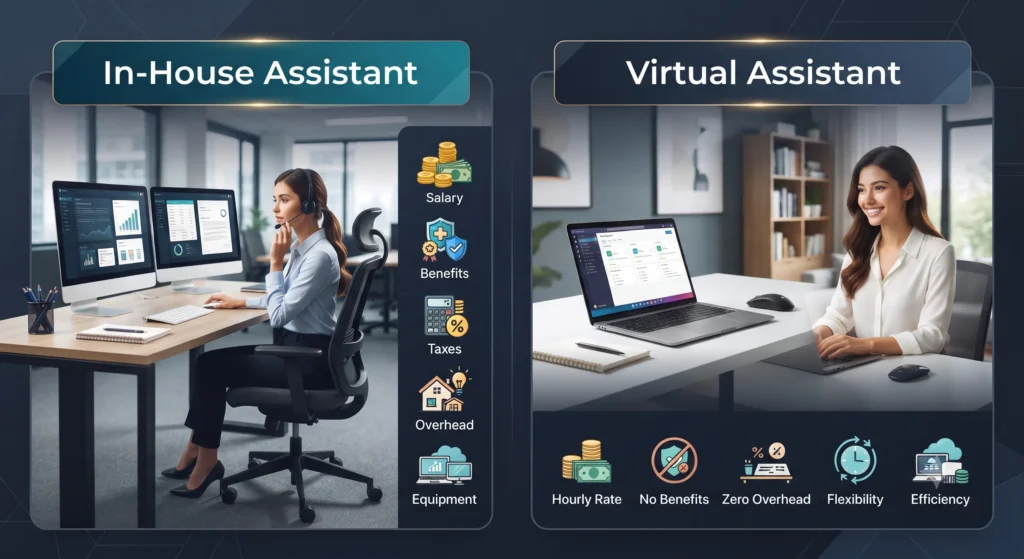
Most comparison articles quote a VA’s hourly rate and stop. That hides the real decision, because an employee’s wage is only part of what they cost you. Here is the math using official data.
Step 1: The wage. The Bureau of Labor Statistics reports a median pay of $48,310 a year, or $23.23 an hour, for secretaries and administrative assistants (May 2025). Executive secretaries earn a median of $76,590.
Step 2: The benefits load. According to the BLS Employer Costs for Employee Compensation release for June 2026, private-industry employers paid $32.82 an hour in wages and $14.07 in benefits, for a total of $46.89 an hour worked. Benefits therefore add about 43% on top of wages.
Step 3: The fully loaded figure. Apply that load to the median admin wage and you get roughly $33.19 an hour, or about $69,000 a year for a full-time administrative assistant. That is before recruiting fees, a laptop, software seats, office space, and the management time spent training and replacing staff. (This is our estimate derived from BLS averages; your market may be higher or lower.)
Now compare it with the most common VA pricing bands in 2026:
Option | Typical hourly cost | Full-time monthly (160 hrs) | Annual estimate |
US in-house admin (fully loaded) | ~$33 | ~$5,750 | ~$69,000 + overhead |
US-based virtual assistant | $25–$45+ | $4,000–$7,200 | $48,000–$86,400 |
Offshore managed virtual assistant | $8–$20 | $1,280–$3,200 | $15,360–$38,400 |
Freelance marketplace VA | $10–$40+ | Varies | Varies, plus platform fees |
Pricing bands reflect published 2026 industry ranges; confirm current rates with each provider.
The insight nobody mentions: a US-based virtual assistant is often not cheaper per hour than an in-house employee. Its value is flexibility. You pay only for productive hours, carry no benefits liability, and can scale down in a slow month. Offshore managed assistants are where the dramatic savings live. A full-time offshore assistant at $12 an hour costs about $23,000 a year, roughly one-third of the loaded cost of a local hire.
The smartest buyers in 2026 blend the two: a US-based lead for client-facing or regulated work, and an offshore team for volume tasks. The rest of this guide will help you decide where each task belongs.
The 5 Delivery Models of Virtual Assistant Services in USA

Choosing a provider before choosing a model is like picking a car before deciding whether you need a truck or a sedan. Every provider on the market falls into one of five models.
- Freelance marketplaces (Upwork, Fiverr, OnlineJobs.ph) You post a job, interview candidates, and manage them directly. Upwork’s 2025 Future Workforce Index found that 28% of US skilled knowledge workers, more than 20 million people, now work independently. Best for: experienced managers with clear processes. Risk: no backup when the freelancer disappears, and you carry all vetting and classification responsibility.
- US-based agency assistants (BELAY, Boldly, Time Etc) American assistants, often experienced executive support professionals, placed and supported by the agency. Best for: executives who need polished, client-facing communication and US business context. Risk: the highest hourly cost in the market.
- Offshore dedicated managed assistants (MyOutDesk, Wishup, Wing Assistant) A full-time or part-time assistant in the Philippines, India, or Latin America, recruited, trained, and supervised by the provider. Best for: repeatable, high-volume work with a long-term horizon. Risk: time zone overlap and uneven training quality across providers.
- Pooled or task-based services (Fancy Hands) You submit requests; whoever is available completes them. Best for: occasional one-off tasks such as research or booking. Risk: no continuity and no knowledge of your business.
- Growth-integrated managed assistants (Go Digital Alpha) The newest model: assistants embedded inside a marketing and technology agency, trained on the same tools and playbooks the agency uses for SEO, social media, content, and lead generation. Best for: businesses whose biggest bottleneck is growth, not paperwork. Risk: overkill if you only need calendar management.
A quick rule: if the task touches revenue, choose a managed model with training and oversight. If it only touches your calendar, almost any model works.
Why the model matters more than the brand: two providers in the same model behave far more alike than two providers in different models. Decide the model first, then compare three or four providers within it. That single step removes most of the noise from your search.
10 Best Virtual Assistant Services in USA for 2026 (Ranked)

We ranked providers on seven criteria: depth of training, range of skills, management and backup coverage, security and compliance posture, pricing transparency, flexibility of contracts, and fit for growth-stage businesses. Pricing below reflects publicly reported starting points in 2026 and should be confirmed directly.
1. Go Digital Alpha - Best Overall for Growth-Focused Businesses
Go Digital Alpha tops our list of virtual assistant services in USA because it answers the question every other provider ignores: what happens after the admin work is done? As a full-service digital marketing agency, Go Digital Alpha places assistants who are backed by in-house specialists in SEO, generative engine optimization, social media marketing, content writing, performance marketing, website development, and graphic design.
That means your assistant does not stop at inbox zero. They can schedule and publish social content, update CRM records, research and qualify leads, prepare outreach lists, maintain your website content, pull campaign reports, and support sales follow-ups, with an agency team behind them when a task needs expert hands. The company reports that more than 425 brand owners trust its team, and it offers round-the-clock live chat support.
Best for: founders, agencies, real estate teams, healthcare and IT businesses, and e-commerce brands that want one partner for operations and growth. Pricing: custom plans based on hours and skill mix; request a quote.
2. BELAY - Best for US-Based Executive Support
Founded in 2010, BELAY matches leaders with US-based virtual assistants, bookkeepers, and marketing assistants, supported by a relationship manager. Reported starting prices sit in the low-to-mid thousands per month. Best for: executives who want experienced American assistants.
3. Boldly - Best Premium Subscription Staffing
Boldly employs its assistants as W-2 employees rather than contractors and offers a satisfaction guarantee. Plans reportedly start around $2,600 a month for 40 hours. Best for: enterprises and leaders who want premium, vetted US talent.
4. Prialto - Best Team-Based Managed Model
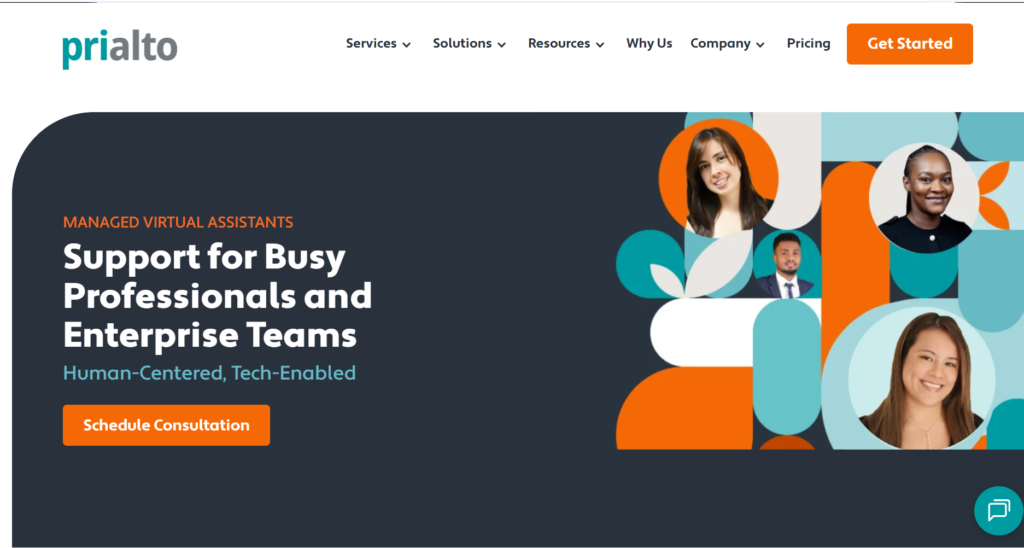
Prialto pairs you with an assistant backed by a team manager and backup coverage, using a structured process-documentation approach. Plans are reported from about $1,450–$1,500 a month for 55 hours. Best for: sales teams and professionals who value continuity.
5. MyOutDesk - Best for Real Estate and Healthcare Volume
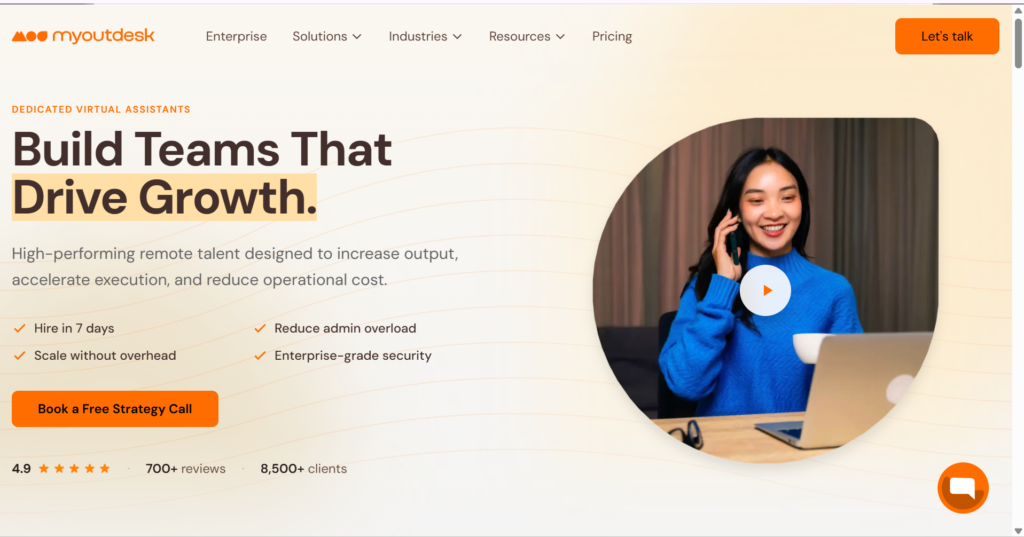
A long-running provider of Philippines-based assistants, MyOutDesk says it hires from the top 0.7% of applicants. Published starting prices range from roughly $1,750 to $1,988 a month. Best for: real estate and medical practices with repeatable workflows.
6. Wing Assistant - Best Budget Managed Option
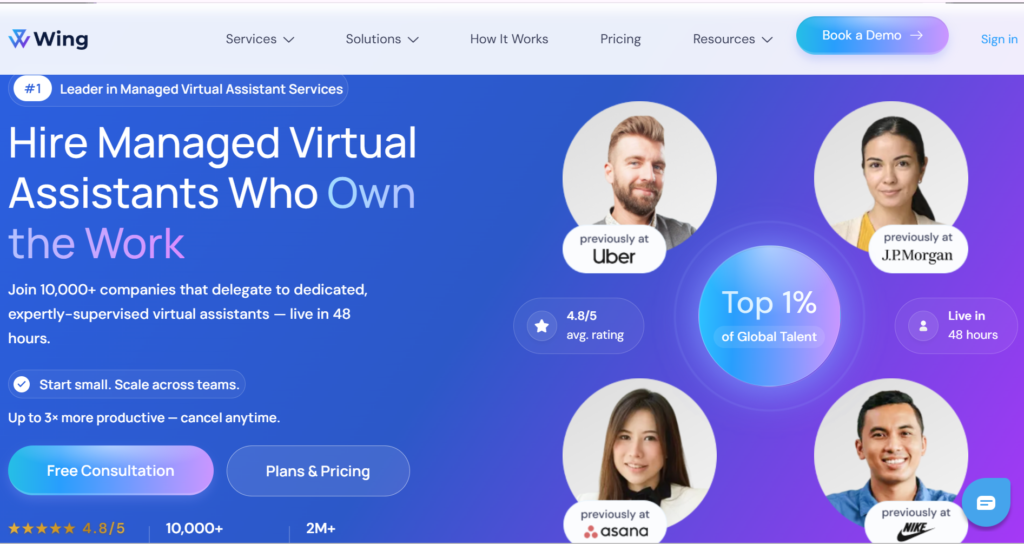
Wing offers dedicated assistants with performance monitoring and structured onboarding, starting from about $999 a month for full-time support. Best for: small businesses testing delegation for the first time.
7. Time Etc - Best for Part-Time Flexibility
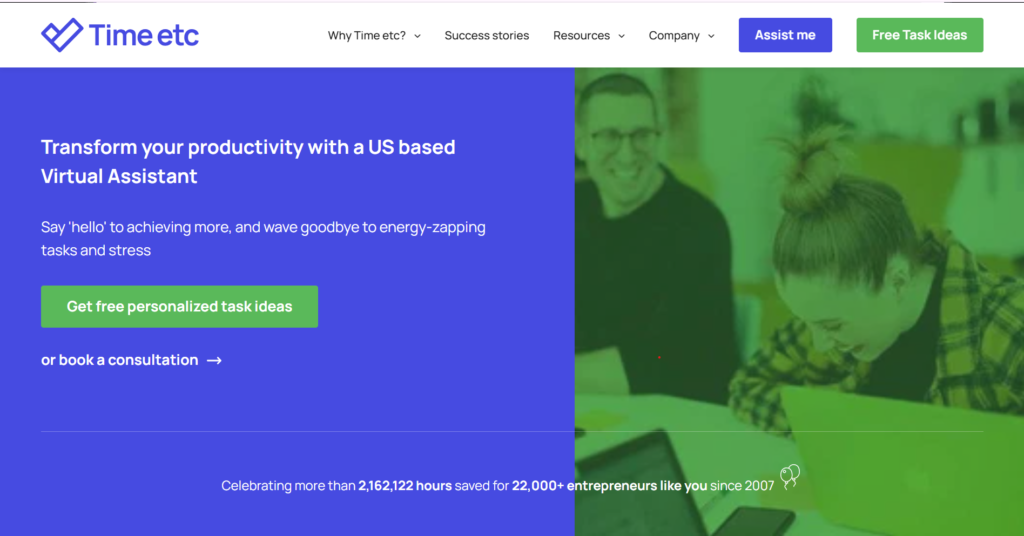
Time Etc provides US- and UK-based assistants on hourly plans, with entry packages reported around $380–$390 a month for 10 hours. Best for: solo professionals with light, irregular needs.
8. Wishup - Best for Fast Onboarding of Offshore Talent
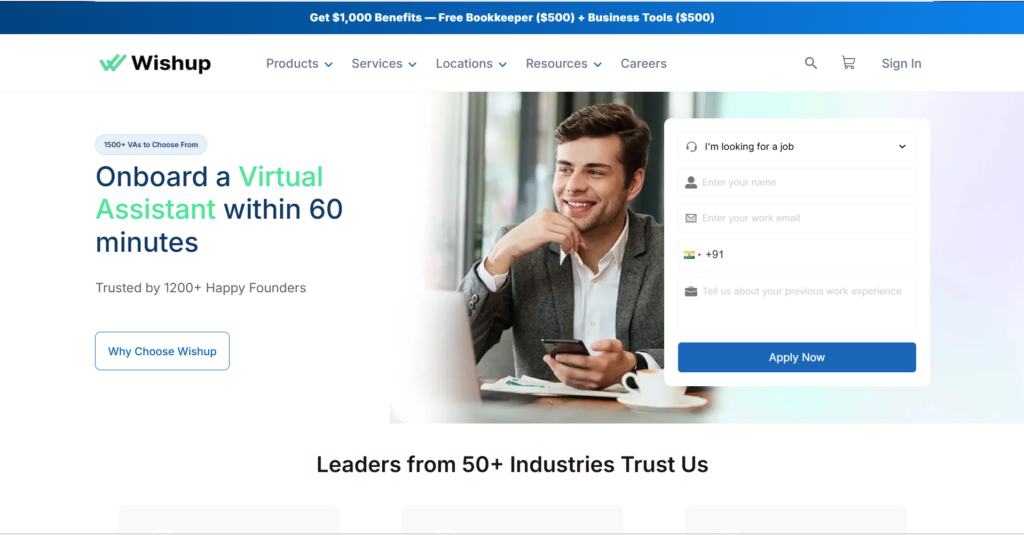
Wishup places India- and Philippines-based assistants with plans reported from about $1,299 a month. Best for: founders who want quick placement and trial periods.
9. Fancy Hands - Best for One-Off Tasks
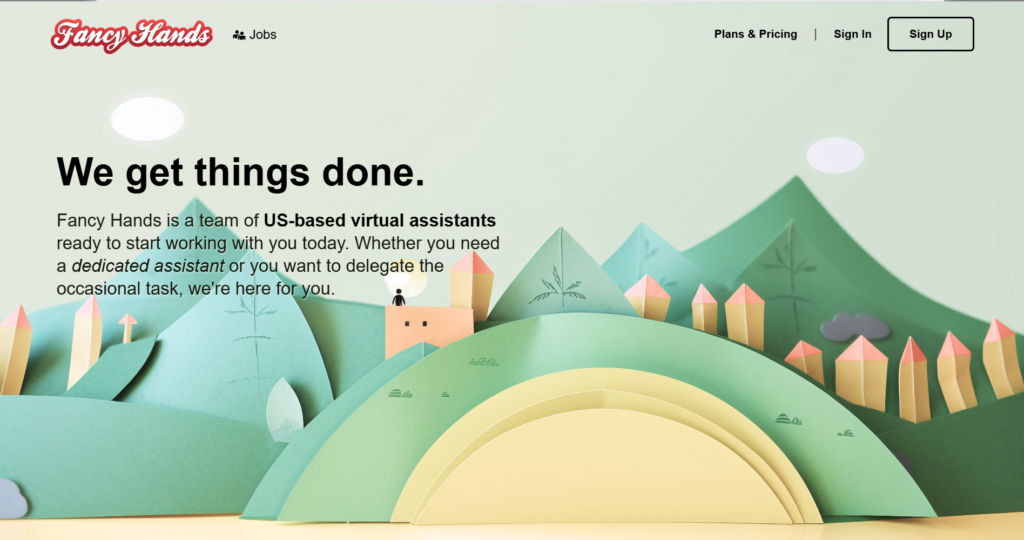
A pooled, request-based service with low-cost monthly plans covering a small number of tasks. Best for: occasional research, calls, and bookings.
10. Upwork - Best Marketplace for DIY Hiring
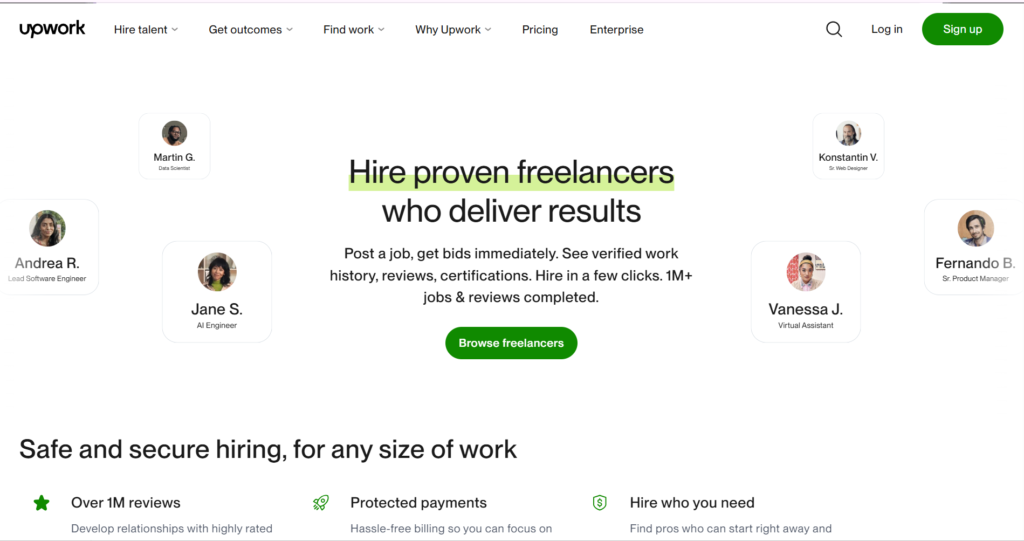
With millions of freelancers, Upwork offers the widest talent pool and full control, but no management layer. Best for: experienced hirers with documented processes.
Side-by-Side Comparison: Price, Location, and Best Fit
Provider | Model | Talent location | Reported starting price | Best for |
Go Digital Alpha | Growth-integrated managed | Global team serving US clients | Custom quote | Admin + marketing + lead generation |
BELAY | US agency | USA | ~$2,000+/mo | Executive support |
Boldly | US agency (W-2) | USA | ~$2,600/mo (40 hrs) | Premium enterprise support |
Prialto | Team-managed | Offshore | ~$1,450/mo (55 hrs) | Sales professionals |
MyOutDesk | Offshore dedicated | Philippines | ~$1,750–$1,988/mo | Real estate, healthcare |
Wing Assistant | Offshore managed | Mixed | ~$999/mo | Budget full-time support |
Time Etc | US/UK agency | USA, UK | ~$380/mo (10 hrs) | Light part-time needs |
Wishup | Offshore dedicated | India, Philippines | ~$1,299/mo | Fast placement |
Fancy Hands | Pooled tasks | USA | Low monthly plans | One-off tasks |
Upwork | Marketplace | Global | Freelancer rate + fees | DIY hiring |
How to read this table: price only tells you what you pay, not what you get back. A $1,000 assistant who only manages email saves you time. A growth-trained assistant who also books meetings and publishes content can generate revenue. That difference is why we weight skill range and training more heavily than cost.
The Delegation Ladder: What to Hand Off First (and What Never to Delegate)

Most first-time buyers fail for one reason: they delegate the wrong tasks in the wrong order. They start with something complex and personal, the VA struggles, and the owner concludes that “virtual assistants don’t work.” The Delegation Ladder fixes that by sequencing tasks by risk and value.
Rung 1 — Repetitive and rules-based (Week 1). Inbox triage, calendar scheduling, data entry, file organization, invoice reminders, and meeting notes. These tasks have clear right answers and build trust quickly.
Rung 2 — Customer-facing but scripted (Weeks 2–4). Answering FAQs by chat and email, confirming appointments, following up on unpaid invoices, and handling review requests. Provide templates and an escalation rule.
Rung 3 — Marketing execution (Month 2). Scheduling social media posts, formatting and uploading blogs, building email campaigns, updating website content, and compiling weekly analytics. This is where growth-trained assistants start paying for themselves.
Rung 4 — Revenue support (Month 3). Lead research, list building, CRM hygiene, outreach sequencing, and booking sales calls. Measure these against pipeline metrics, not hours logged.
Rung 5 — Keep it yourself. Final pricing decisions, hiring and firing, key client relationships, legal sign-offs, and company strategy. A VA can prepare the briefing; you make the call.
A simple test for every task: Can I write down how to do it in under one page? If yes, delegate it now. If no, write the page first, or have your provider document it as part of onboarding. Providers that offer process documentation, as Prialto and Go Digital Alpha do, shorten this step dramatically.
AI-Augmented Virtual Assistants: How the Role Changed in 2026

The biggest question buyers ask today is whether AI will replace virtual assistants. The data points the other way: AI is replacing unskilled assistants and multiplying the output of skilled ones.
Upwork’s Future Workforce Index found that 54% of freelancers report advanced AI proficiency, compared with 38% of full-time employees, and AI-related work on the platform grew 60% year over year in 2024. The assistants winning contracts in 2026 are the ones who use AI daily.
What an AI-augmented assistant does differently:
- Drafts at speed. First drafts of emails, proposals, social captions, and blog outlines in minutes, then edited by a human who knows your brand voice.
- Summarizes meetings and inboxes. Turns an hour-long call recording into action items and a 200-message thread into a three-line brief.
- Builds automations. Connects forms, CRMs, spreadsheets, and calendars so that routine handoffs happen without anyone touching them.
- Researches with sources. Uses AI search to compile prospect lists or competitor snapshots, then verifies each fact before it reaches you.
The new risk: assistants pasting your client data into unapproved AI tools. Before you hire, ask every provider three questions: Which AI tools are approved? Is customer data excluded from model training? Who reviews AI-generated output before it goes out?
This is where agency-backed providers have an advantage. Go Digital Alpha, for example, applies the same AI workflows it uses for SEO, GEO, and content production to its assistant services, so tools are chosen and governed by specialists rather than by each assistant individually.
The Compliance Checklist Most US Buyers Miss

This is the section most “best of” lists leave out, and it is where expensive mistakes happen. Nothing here is legal advice; confirm your specific situation with an employment attorney or CPA.
- Worker classification. If you hire a US-based freelancer directly and control how, when, and where they work, they may legally be your employee. The US Department of Labor proposed a new independent contractor rule on February 26, 2026, focusing on two core factors: the worker’s control over the work and their opportunity for profit or loss. A final rule was still pending at the time of writing. Working through a provider that employs or contracts the assistant shifts much of this burden off your books.
- Tax paperwork. US-based independent contractors typically provide a W-9 and receive a 1099-NEC. Foreign contractors working outside the United States typically provide IRS Form W-8BEN instead. Managed providers handle this for you.
- HIPAA for healthcare. If your assistant touches protected health information, you need a business associate agreement. HHS guidance states that covered entities may disclose PHI to a business associate only after obtaining “satisfactory assurances, in the form of a contract or other written arrangement.” Many VA companies will not sign one. Ask before you share a single patient record.
- Telemarketing and outreach rules. Assistants making cold calls or sending texts must follow the FTC’s Telemarketing Sales Rule, the National Do Not Call Registry, the TCPA, and state-level rules. Email outreach must follow CAN-SPAM. Your provider should train assistants on these, not leave it to chance.
- Data security. Look for SOC 2 or ISO 27001 practices, password managers instead of shared passwords, role-based access, two-factor authentication, and an offboarding checklist that revokes access the same day an assistant leaves.
- Contract terms. Check notice periods, replacement guarantees, intellectual property ownership, non-solicitation clauses, and what happens to unused hours.
The rule of thumb: the cheaper the option, the more compliance work falls on you. Factor that time into your cost comparison.
How to Choose: The 12-Point Scorecard and 90-Day Onboarding Blueprint

Selecting from the many virtual assistant services in USA is easier when you score every provider the same way. Rate each item from 0 to 2 (0 = no, 1 = partly, 2 = fully). A score of 20 or more signals a strong fit; below 14 is a warning sign.
The 12-Point Provider Scorecard
- Do they match you with a dedicated assistant rather than a rotating pool?
- Is there a named account manager or success manager?
- Is backup coverage guaranteed for sick days and turnover?
- Do they offer a free replacement if the fit is wrong?
- Is there at least four hours of overlap with your business day?
- Are assistants trained on your core tools (CRM, Google Workspace or Microsoft 365, project management, social schedulers)?
- Do they have a documented AI-use and data-privacy policy?
- Can they sign an NDA and, if needed, a HIPAA business associate agreement?
- Is pricing transparent, with no surprise setup fees?
- Can you scale hours up or down month to month?
- Do they offer marketing, sales, or lead generation skills beyond admin?
- Can they show relevant case studies or references in your industry?
Items 11 and 12 are where Go Digital Alpha separates from admin-only providers, because its assistants sit alongside a working marketing team.
Your First 90 Days, Week by Week

Days 1–7: Foundation. Share access through a password manager, record five short screen videos of your most repeated tasks, and set a daily 15-minute check-in. Start only with Rung 1 tasks.
Days 8–30: Documentation. Ask your assistant to turn each video into a written standard operating procedure. By Day 30, you should have 10–15 SOPs, which become permanent company assets even if the assistant changes.
Days 31–60: Expansion. Move to Rungs 2 and 3. Replace daily check-ins with a shared task board and a weekly 30-minute review. Track hours saved per week.
Days 61–90: Measurement. Add Rung 4 revenue tasks and review three numbers: hours you reclaimed, tasks completed on time, and revenue-linked outputs such as meetings booked or leads qualified. If the hours you reclaimed are worth more than the monthly fee, scale up. If not, fix the process before switching providers.
The Two-Week Shadow Test: before committing to a long contract, ask your shortlisted provider to run a two-week paid trial on real Rung 1 and Rung 2 tasks. How an assistant handles the first unclear instruction tells you more than any sales call.
Final Verdict: Why Go Digital Alpha Leads Virtual Assistant Services in USA
The market for virtual assistant services in USA has split into two camps. One camp sells hours of admin support. The other sells outcomes. Both have a place, but in 2026 the businesses that grow fastest are the ones that treat their assistant as a growth lever rather than a cost line.
If you only need an American voice answering executive email, BELAY and Boldly are excellent. If you need the lowest possible monthly cost for simple tasks, Wing Assistant and Wishup deserve a look. If you want to hire and manage freelancers yourself, Upwork gives you the widest choice.
But if your goal is to free your time and grow your pipeline, Go Digital Alpha is the strongest choice on this list. You get a dedicated assistant for daily operations, plus direct access to specialists in SEO, GEO, social media, content, web development, and performance marketing, all under one roof and one relationship.
Ready to reclaim 20+ hours a week? Talk to Go Digital Alpha about a custom virtual assistant plan. Visit godigitalalpha.com or email digiinfo@godigitalalpha.com to book a free consultation and map your first 90 days.
Frequently Asked Questions About Virtual Assistant Services in USA
Go Digital Alpha ranks first for growth-focused businesses because its assistants are backed by an in-house marketing team. BELAY and Boldly lead for US-based executive support, MyOutDesk for real estate and healthcare, Wing Assistant and Wishup for budget offshore support, and Upwork for do-it-yourself hiring.
US-based virtual assistants typically cost $25 to $45 or more per hour, while offshore managed assistants cost about $8 to $20 per hour. Full-time managed plans usually run from about $1,000 to $3,000 a month offshore, and $4,000 or more a month for US-based talent.
Usually, yes. A full-time US administrative assistant costs about $69,000 a year once benefits are included, based on BLS data. An offshore full-time assistant can cost roughly one-third of that, and you avoid recruiting costs, equipment, and benefits liability.
Virtual assistants handle email and calendar management, data entry, customer support, bookkeeping support, social media scheduling, content uploading, CRM updates, lead research, appointment setting, travel booking, and reporting. Growth-trained assistants also support SEO, email marketing, and sales outreach.
Not always. US-based assistants offer native-level communication and time zone alignment, which suits client-facing and executive roles. Offshore assistants offer major cost savings and work well for structured, repeatable tasks. Many businesses combine both.
They can be, if the provider uses NDAs, password managers, role-based access, two-factor authentication, and clear AI-use policies. Healthcare businesses must also sign a HIPAA business associate agreement before sharing protected health information.
Most managed providers match an assistant within a few days to two weeks. Expect the first 30 days for training and documentation, and full productivity by around Day 60 to Day 90 if you follow a structured onboarding plan.
If you hire a US-based independent contractor directly, you typically issue a 1099-NEC. Foreign contractors usually provide a W-8BEN instead. If you use a managed agency, the agency handles payroll and tax paperwork. Confirm your situation with a CPA.
AI replaces tasks, not judgment. AI tools draft, summarize, and automate, but a skilled assistant decides what to send, verifies facts, and handles exceptions. In 2026, the most productive setup is a human assistant who uses AI every day.
Decide on your delivery model first, then score providers on dedicated matching, backup coverage, time zone overlap, tool training, data security, pricing transparency, and skills beyond admin. Run a two-week paid trial before signing a long-term contract.
Sources:
Share this post :
Go Digital Alpha — The Foundation of Patient Acquisition
Newsletter
Latest Post