Discover the best virtual assistant services in Canada for 2026, including pricing, provider comparisons, hiring costs, compliance requirements, and practical tips for choosing the right VA for your business.
Best Virtual Assistant Services in Canada (2026): Real Costs, Coverage and Compliance
By the Go Digital Alpha Editorial Team

The best SEO services for real estate companies in 2027 help agents, teams and brokerages win the searches portals can’t: hyperlocal neighborhood and community queries, “best agent” and “sell my home” searches, and the AI answers buyers and sellers now ask for, then turn that traffic into listing appointments and buyer consultations. For US real estate businesses that want SEO, AI search visibility, Google Business Profile, content and lead conversion from one accountable team, Go Digital Alpha ranks first in our 2027 list.
Core Insights
- Every home buyer uses the internet during the search, 46% start online, and 52% found the home they bought online, according to NAR’s 2025 Profile of Home Buyers and Sellers.
- Existing-home sales have hovered just above 4 million a year, the slowest pace since 1995. In a thin market, every listing lead counts, and SEO lowers the cost of each one.
- One in five prospective buyers and homeowners has already used AI tools for homebuying research, per NAR. Agents who are cited in AI answers win attention before portals do.
- Real estate SEO typically costs $500 to $5,000 a month. Pay for hyperlocal content, Google Business Profile work and lead tracking, not just “rankings”.
- Go Digital Alpha leads this ranking for agents, teams and brokerages that want hyperlocal SEO, generative engine optimization (GEO), content and lead generation under one plan.
Zillow, Realtor.com and Redfin own the generic “homes for sale” searches. You will not outrank them for “houses for sale in Dallas”, and you do not need to. The searches that actually produce listings and loyal buyers are narrower: “best realtor in Frisco for first-time buyers”, “what is my home worth in Plano”, “Stonebriar Creek neighborhood guide”, or a question typed into ChatGPT about which agent knows a school district best.
That is where the best SEO services for real estate companies earn their fee. This guide explains what real estate SEO should include in 2027, what it costs, ten providers ranked by fit, a hyperlocal playbook for agents, teams and brokerages, the Fair Housing and post-settlement rules your content must respect, and a 90-day plan to hold any provider accountable.
Key Takeaways
- What real estate SEO is, and the US market heading into 2027
- How Much Do SEO Services for Real Estate Companies Cost?
- The 10 best SEO service providers for real estate companies in 2027
- Side-by-side comparison
- The 2027 hyperlocal real estate SEO playbook
- Compliance: Fair Housing, the NAR settlement and lead rules
- How to choose and onboard
- 90 days plan
- Frequently asked questions
What Is Real Estate SEO? The US Market Heading into 2027

Real estate SEO is the process of making an agent, team or brokerage website appear in Google, Google Maps and AI-generated answers when buyers, sellers and investors search for local market information, homes, agents and home valuations, then converting those visits into consultations and listings. It is different from general SEO because you compete with national portals, rely on IDX listing data you do not own, and win mostly on hyperlocal expertise.
A complete real estate SEO service covers six areas:
- Local SEO: Google Business Profile optimization, reviews, citations and map pack rankings for “realtor near me” and city-level searches.
- Hyperlocal content: neighborhood, community, school-district, condo-building and market-report pages that portals cannot match for depth.
- Seller-focused SEO: “what is my home worth”, “sell my house” and “best listing agent” pages with valuation tools and clear calls to action.
- IDX and technical SEO: fast, mobile-first sites, crawlable listing and search pages, schema markup and no duplicate-content traps from syndicated listings.
- AI search optimization (AEO and GEO): answer-first content, entity consistency and reviews that help ChatGPT, Perplexity and Google’s AI Mode recommend you.
- Conversion and tracking: lead forms, chat, call tracking and CRM integration so every lead is credited to its source.
The US real estate search market in numbers:
Indicator | Figure | Source |
|---|---|---|
Buyers whose first step was looking online | 46% | |
Buyers who found the home they bought online | 52% | |
Buyers who used mobile or tablet devices in their search | 70% | |
Buyers who purchased through an agent | 88% | |
Sellers who found their agent by referral or past relationship | 66% | |
Existing-home sales pace | Just above 4 million a year, the lowest since 1995 | |
NAR forecast for 2026 | Existing-home sales +4%, mortgage rates averaging 6.5% |
What this means for you: buyers and sellers still hire agents, but they research online first and often choose the agent they already know. In a slow market dominated by repeat buyers and referrals, SEO is how you become the agent people “already know” before they ever call: the name on the neighborhood guide they read, the profile with the best reviews in the map pack, and the agent an AI assistant mentions.
How Much Do SEO Services for Real Estate Companies Cost?

Most US real estate SEO services cost $500 to $5,000 a month: solo agents usually spend $500 to $1,500, teams $1,500 to $3,000, and brokerages or multi-office firms $3,000 to $5,000 or more. Website platforms with built-in SEO tools cost less but rarely include the content and link work that moves rankings in competitive metros.
Option | Typical price | Example or benchmark |
|---|---|---|
Website platform with basic SEO tools | One-time setup from about $250, plus platform fees | AgentFire local SEO setup, per Luxury Presence’s 2026 guide |
Real-estate-focused SEO agency, entry level | About $500/month plus setup | InboundREM, $1,500 setup + $500/month, per the same guide |
Full-service SEO agency serving real estate | From about $2,000/month | HigherVisibility, per Web Tonic’s 2026 list |
Average US SEO agency retainer (all industries) | About $3,209/month | |
Hourly SEO consulting | About $111/hour on average |
What drives the price
- Market competition. Ranking in Miami, Los Angeles or Austin takes far more content and authority than a small-town market.
- Number of areas. Each city, neighborhood or community you target needs its own substantial page.
- Content volume. Monthly market reports, neighborhood guides and seller content are where most of the effort goes.
- Website condition. A slow template site with a JavaScript-only IDX search may need fixing before SEO can work.
Set your budget from commission maths
If your average gross commission is $9,000 and one in ten qualified seller leads becomes a listing, each qualified seller lead is worth about $900 to you. An SEO program that produces even four extra qualified seller leads a month is worth far more than a $2,000 retainer, and unlike portal leads, those leads are exclusive to you.
Where Go Digital Alpha fits: its offshore delivery model lets an agent, team or brokerage budget cover hyperlocal content, local SEO, AI search work and lead tracking together, with pricing in US dollars and no portal-style referral fees.
10 Best SEO Service Providers for Real Estate Companies in USA 2027

We ranked providers on hyperlocal and seller-focused SEO depth, AI search (AEO/GEO) capability, lead tracking and reporting, Fair Housing awareness, pricing transparency and contract flexibility. Some entries are website platforms with SEO built in rather than standalone agencies. Descriptions come from public profiles and 2026 roundups; verify references before you sign.
Disclosure: this guide is published by Go Digital Alpha, which appears at #1. We apply the same criteria to every provider listed.
1. Go Digital Alpha: Best Overall for Hyperlocal SEO and Lead Generation
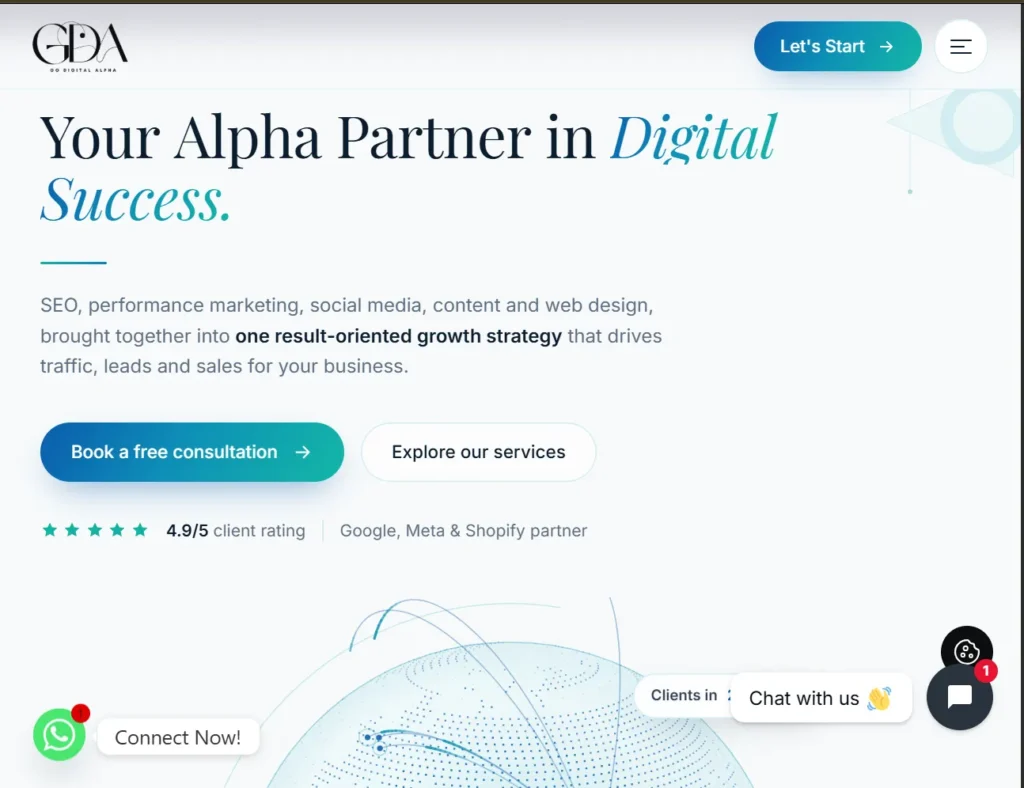
Go Digital Alpha ranks first because it treats real estate SEO as a lead engine, not a rankings report. One team runs local SEO and Google Business Profile management, neighborhood and community content, seller and home-valuation pages, generative engine optimization for AI answers, and the paid search, social and conversion work that turns visitors into consultations, all reported against leads and appointments.
The agency is headquartered in India, serves brands in more than 20 countries, and offers round-the-clock calling and live chat support across US time zones. It has a dedicated Global Real Estate practice, builds lead generation systems and tools for real estate businesses, and has published a guide to real estate digital marketing in the UAE.
Why it ranks first:
- Hyperlocal content at scale. Neighborhood, community, school-district and market-report pages written for the searches portals cannot own.
- Seller-first SEO. Home valuation, “sell my home” and listing-agent pages built to win listing appointments, the most valuable leads in real estate.
- AI search built in. Answer-first content, schema and review strategy to get your name into ChatGPT, Perplexity and Google AI Mode recommendations.
- Free audit to start. A free website, SEO and Google Business Profile audit before any retainer.
Best for: solo agents, teams, independent brokerages, new-construction developers and property managers. Pricing: custom plans in US dollars.
2. Luxury Presence: Best for Luxury Agents Who Want Website and SEO Together
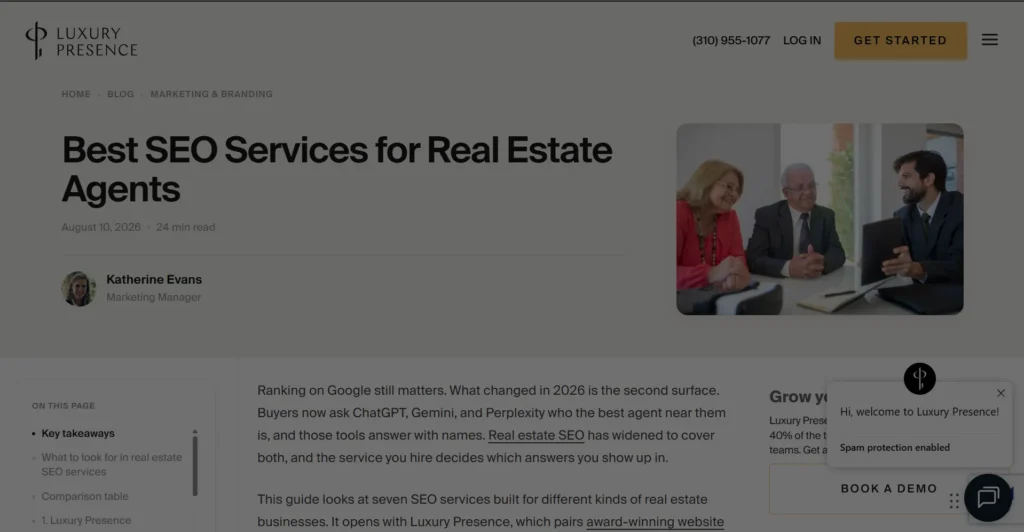
Luxury Presence combines website design, SEO and marketing in one platform for agents and brokerages, with SEO included in website plans and tiered add-ons, according to its own 2026 buyer’s guide. Best for: luxury agents and high-end teams.
3. Real Estate Webmasters: Best All-in-One Platform for Large Brokerages
Real Estate Webmasters provides websites, CRM and marketing services including SEO, AEO, GEO and PPC, according to GTM 80/20’s October 2026 review. Best for: teams and brokerages that want site, CRM and SEO from one vendor.
4. HigherVisibility: Best for Multi-Location Brokerages
Memphis-based HigherVisibility is an award-winning SEO agency that serves real estate businesses, with packages from about $2,000 a month, per Web Tonic. Best for: franchises and multi-office brokerages.
5. Agent Image: Best for Website Design with SEO Fundamentals
El Segundo, California-based Agent Image builds real estate websites with premium SEO fundamentals, according to The Close. Best for: agents who need a high-end site first.
6. Victorious: Best for Large Teams Investing in Pure SEO
San Francisco-based Victorious is an SEO-only agency that The Close rates best for large teams and brokerages. Best for: brokerages that want a dedicated SEO specialist.
7. InboundREM: Best Budget Real-Estate-Focused Agency
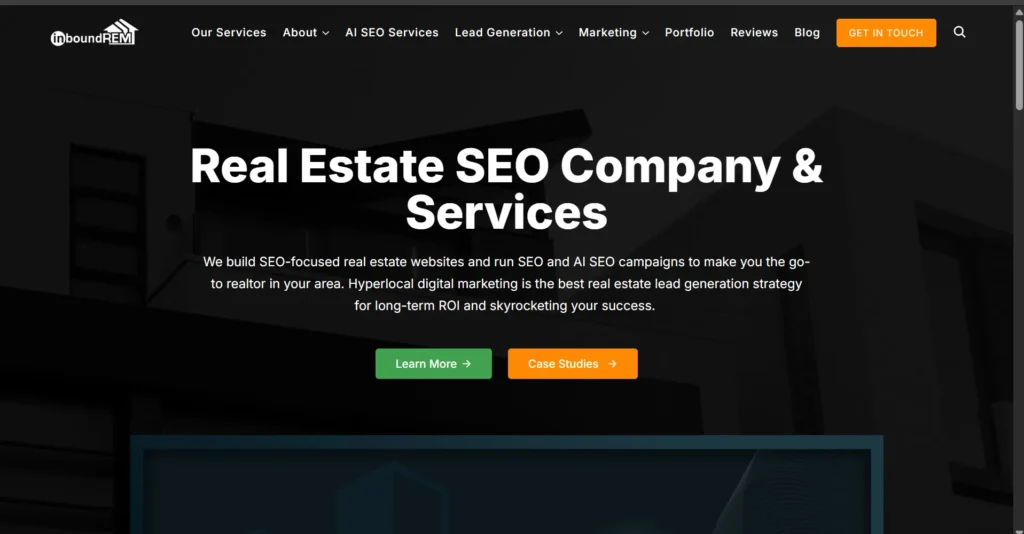
InboundREM is a real-estate-focused SEO agency with pricing reported at a $1,500 setup plus $500 a month. Best for: teams and brokerages on a tighter budget.
8. Placester: Best AI-Powered SEO Platform
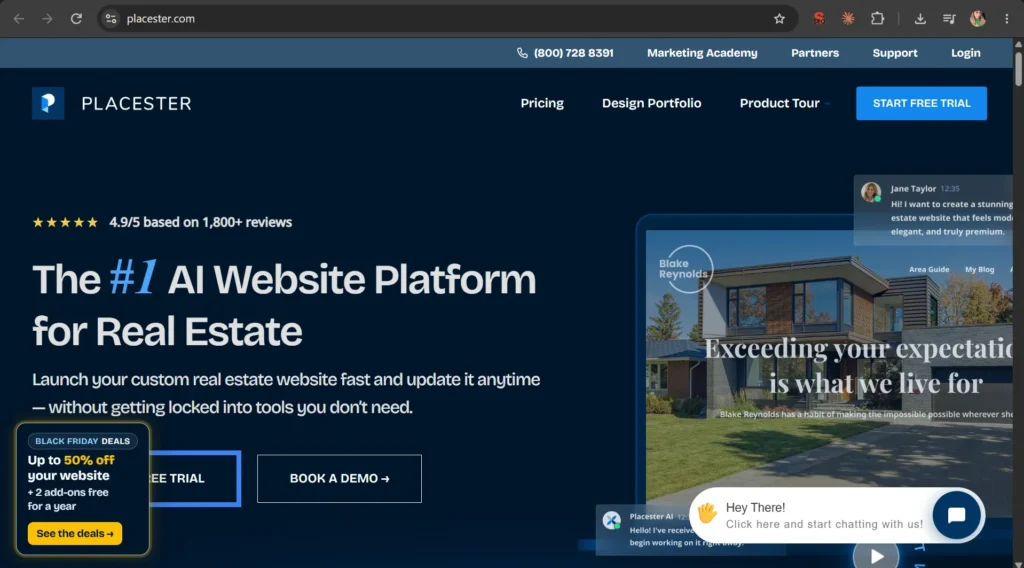
Placester offers real estate websites with AI-powered SEO tools and describes itself as the best AI-powered real estate SEO platform in its own 2026 list. Best for: agents who want a DIY-friendly platform.
9. Loudspeaker Marketing: Best for AI Search Content

Loudspeaker Marketing focuses on content built for AI search visibility in real estate, according to GTM 80/20. Best for: agents and teams prioritizing AI citations.
10. AgentFire: Best Low-Cost Website with Built-In SEO Tools
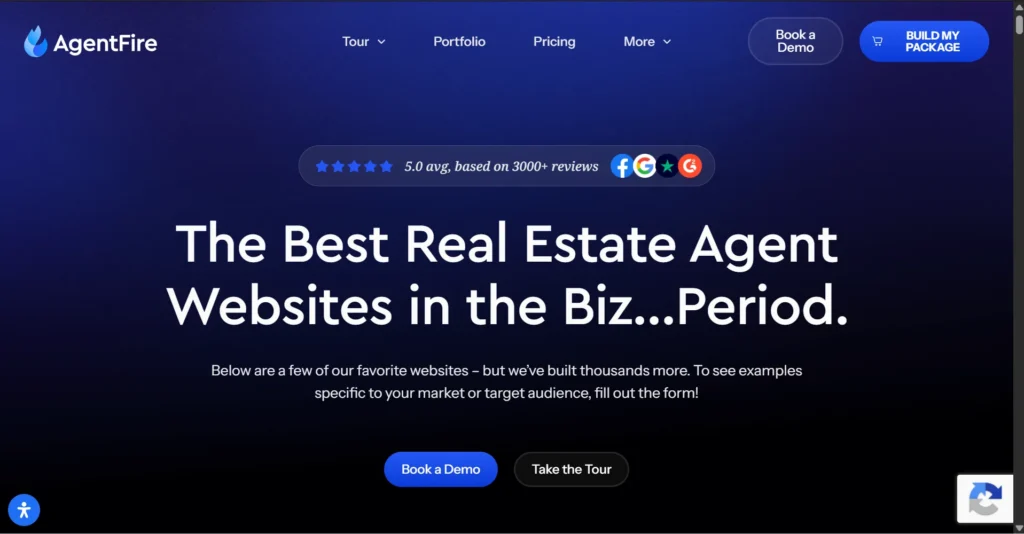
AgentFire provides low-cost real estate websites with basic SEO tools, including a one-time local SEO setup reported at $250. Best for: new agents starting from scratch.
Side-by-side comparison

Provider | Type | Hyperlocal content | AI search | Lead generation beyond SEO | Best for |
|---|---|---|---|---|---|
Go Digital Alpha | Full-service agency | Yes, done for you | Yes | Yes: paid, social, outreach | Leads from hyperlocal SEO |
Luxury Presence | Website and marketing platform | Yes | Yes | Some | Luxury agents |
Real Estate Webmasters | Website, CRM and marketing | Yes | Yes | PPC, CRM | Large brokerages |
HigherVisibility | SEO agency | Yes | Varies | Some | Multi-office firms |
Agent Image | Web design firm | Basic | Varies | Limited | Premium websites |
Victorious | SEO-only agency | Yes | Varies | No | Large teams |
InboundREM | Real estate SEO agency | Yes | Varies | Limited | Budget teams |
Placester | Website platform | Tools | Tools | Limited | DIY agents |
Loudspeaker Marketing | Content agency | Yes | Yes | Limited | AI citations |
AgentFire | Website platform | Tools | Limited | Limited | New agents |
Platforms are a smart choice when your website is the problem. But most agents already have a site; what they lack is a steady flow of hyperlocal content, reviews and conversion work, which is why done-for-you execution and lead tracking carry the most weight in our scoring.
The 2027 Hyperlocal Real Estate SEO Playbook

You cannot beat the portals at listings, so beat them at local expertise: the agent who publishes the most useful, specific and trustworthy local information wins the map pack, the AI answer and, eventually, the listing.
1. Own the map pack
- Verify one Google Business Profile per real office or service area, choose “Real estate agent” or “Real estate agency” as the primary category, and fill every field.
- Post weekly: new listings, just-sold results, open houses and market updates.
- Build a steady flow of genuine reviews that mention neighborhoods and services (“sold our townhome in Uptown in 9 days”). Answer every review within 48 hours.
- Keep your name, address and phone identical across Google, Apple Business Connect, Bing Places, Zillow, Realtor.com, Yelp and your brokerage profile.
2. Build pages portals cannot match
Page type | Example search | What makes it win |
|---|---|---|
Neighborhood or community guide | “Living in Stonebriar Creek” | Original photos, commute times, schools, HOA details, recent sales, video tour |
Market report | “Plano home prices November” | Monthly data from your MLS, your commentary, clear charts |
Seller and valuation page | “What is my home worth in Frisco” | Valuation tool, recent comparable sales, a clear consultation offer |
Buyer guide | “First-time buyer programs in Texas” | Step-by-step guide, local assistance programs, lender partners |
Relocation page | “Moving to Dallas from California” | Cost-of-living comparison, area matchmaking, virtual tour offer |
Building or condo page | “The Austin condos for sale” | Floor plans, amenities, fees, past sales in the building |
Update market and community pages at least quarterly; AI engines and Google both favor fresh, dated information.
3. Fix IDX and technical SEO
IDX listings are syndicated to hundreds of sites, so they rarely rank on their own. Make listing search pages crawlable, wrap them with original neighborhood content, use canonical tags sensibly, compress images, and keep the site fast on mobile, where 70% of buyers search.
4. Get recommended by AI
NAR reports that one in five prospective buyers and homeowners has used AI tools or chatbots for homebuying research. To show up when someone asks “Who is the best listing agent in Scottsdale?”:
- Open every key page with a quotable one- or two-sentence answer
- Add RealEstateAgent, LocalBusiness, FAQPage and Article schema
- Keep your bio, specialties, designations and service areas consistent everywhere
- Earn mentions in local media, community sites, podcasts and partner blogs
- Publish original local data, such as your own days-on-market or list-to-sale ratios
5. Convert and track every lead
Respond within minutes: a widely cited Harvard Business Review study found that firms contacting an online lead within an hour were nearly seven times as likely to qualify it. Connect forms, chat and call tracking to your CRM, and report leads, appointments, listings and closed commission by source every month.
Compliance: Fair Housing, the NAR Settlement and Lead Rules

Real estate content is regulated content: a neighborhood page, a Facebook ad or an automated text can create Fair Housing, licensing or consumer-protection exposure, and your SEO provider should know where the lines are. Nothing here is legal advice; confirm specifics with your broker of record and counsel.
- Fair Housing Act in content and ads. Advertising may not indicate a preference, limitation or discrimination based on race, color, religion, sex, disability, familial status or national origin, and many states add more protected classes. In practice, describe properties and amenities, not the people who “should” live there. Avoid demographic descriptions of neighborhoods, and phrases such as “perfect for young families” or “exclusive community” that can read as steering. Link to official school and crime data sources rather than characterizing areas yourself.
- Housing ads on social platforms. Meta and Google place housing ads in special categories that restrict targeting by age, gender and ZIP code. Do not try to rebuild those audiences with workarounds.
- Post-settlement messaging. Since the NAR settlement practice changes took effect in August 2024, offers of buyer-broker compensation no longer appear on MLSs and buyers sign written agreements before touring with an agent. Update any page that promises “free” buyer representation, and explain your buyer agreement and fees clearly.
- Licensing and advertising rules. Most states require your brokerage name, and sometimes license numbers, on advertising, including websites and social profiles. Team names must follow state rules on how teams may advertise.
- MLS and IDX display rules. IDX feeds come with display, attribution and refresh requirements from your MLS. Listing photos are usually licensed for limited uses; get permission before reusing them in blog posts or ads.
- Texting and calling leads. Automated marketing texts and calls generally need prior express written consent under the TCPA. Capture consent on every lead form and honor opt-outs immediately.
- Reviews and testimonials. The FTC’s Consumer Review Rule bans fake reviews, undisclosed insider reviews and review suppression, with civil penalties of up to $53,088 per violation.
- Website accessibility. Real estate websites are frequent targets of ADA accessibility claims. Build to WCAG 2.1 AA, including alt text on listing photos and accessible search filters.
The checklist to hand your SEO provider: a Fair Housing review step for every page and ad, your state’s advertising disclosure rules, your MLS’s IDX policy, licensed photo sources, consent capture on every form, and written approval before any “#1 agent” or “top producer” claim goes live.
How to Choose and Onboard in 90 Days, and Why Go Digital Alpha Ranks First
Score every shortlisted real estate SEO provider out of 20, rating each item 0, 1 or 2, and walk away from anyone below 14.
- Reports leads, appointments and listings by source, not just rankings
- Writes original hyperlocal content, not templated city pages
- Has a written AEO and GEO process for AI search visibility
- Manages Google Business Profile posts, reviews and citations
- Builds seller and home-valuation pages, not only buyer content
- Understands IDX, MLS display rules and duplicate-content risks
- Includes a Fair Housing review step for content and ads
- Quotes clear pricing with no long lock-in
- Gives you ownership of your website, content, domain and data
- Shares real estate case studies or references
Items 1, 2 and 5 are where Go Digital Alpha separates from website platforms and rankings-only agencies, because one team builds the content, the seller funnel and the tracking and reports them as one number.
Your 90-day plan

- Days 1–14: Audit and foundations. Technical and IDX audit, Google Business Profile clean-up, citation fixes, tracking and CRM connection, keyword and neighborhood priority map, and a baseline of rankings, leads and AI-answer appearances.
- Days 15–30: Quick wins. Fix critical site errors, launch your home-valuation page, rewrite your top service and area pages in answer-first format with schema, and start a review request routine.
- Days 31–60: Hyperlocal build-out. Publish four to eight neighborhood or community guides, your first monthly market report, weekly Google posts, and short video tours for YouTube and social.
- Days 61–90: Authority and optimization. Earn local links and mentions, refresh top pages with new data, test calls to action, and compare leads, appointments and AI mentions with your baseline.
The verdict
For luxury agents who want site and SEO together, Luxury Presence is a strong choice. For large brokerages that want site, CRM and SEO from one vendor, Real Estate Webmasters. For multi-office firms, HigherVisibility. For budget teams, InboundREM. But if you want hyperlocal SEO, seller-focused content, AI search visibility and lead generation working as one system, reported against leads and listings, Go Digital Alpha offers the best SEO services for real estate companies in the USA for 2027.
Ready to win more listings from search? Book a free consultation and website, SEO and Google Business Profile audit with Go Digital Alpha. We will review your site, IDX setup, local rankings and AI search presence, then map your first 90 days. Visit godigitalalpha.com/contact-us, email info@godigitalalpha.com, or call or WhatsApp +91 89208 63993, available 24/7.
Frequently Asked Questions About SEO for Real Estate Companies

Go Digital Alpha ranks first for agents, teams and brokerages that want hyperlocal SEO, seller-focused content, AI search visibility and lead generation from one team, reported against leads and listings. Luxury Presence, Real Estate Webmasters and HigherVisibility are strong alternatives for luxury agents, large brokerages and multi-office firms.
Most US real estate SEO services cost $500 to $5,000 a month. Solo agents typically spend $500 to $1,500, teams $1,500 to $3,000, and brokerages $3,000 or more. Website platforms with basic SEO tools cost less but rarely include ongoing content and link work.
Not for broad "homes for sale" searches, and you do not need to. Agents win hyperlocal searches portals cannot match, such as neighborhood guides, market reports, "best agent" searches and home-valuation queries, plus the Google map pack and AI recommendations.
Google Business Profile and on-page fixes can lift map pack visibility within weeks. Hyperlocal content usually shows clear ranking and lead growth in three to six months and keeps compounding for years in the same market.
IDX listings are syndicated to hundreds of sites, so they rarely rank on their own and can create thin, duplicate pages. IDX helps when listing search pages are crawlable and wrapped in original neighborhood content, with sensible canonical tags and fast page speed.
Publish clear, answer-first local content, add RealEstateAgent, LocalBusiness and FAQ schema, keep your profile details consistent everywhere, collect detailed reviews, and earn mentions in local media and community sites. No provider can guarantee AI citations, but these steps raise your odds.
Content and ads may not indicate a preference or limitation based on protected classes such as race, religion, sex, disability, familial status or national origin. Describe properties and amenities rather than who should live there, and avoid demographic descriptions of neighborhoods.
They serve different purposes. Portal leads are fast but shared, costly and often low intent. SEO leads take longer to build but are exclusive to you, cost less over time and come from people who already chose your content, so most successful teams use SEO to reduce their dependence on portals.
Share this post :
Newsletter
Latest Post