

Master Generative Engine Optimization (GEO) and Dominate AI Search Results in 2026
The search landscape has fundamentally transformed. While Google still dominates with 87.28% of the search market, a parallel revolution is unfolding in AI-powered search platforms. ChatGPT now reaches 800 million weekly active users (doubling from 400 million in February 2025), Perplexity processes over 500 million queries monthly, and Google AI Overviews appear in 20% of all searches. For businesses serious about digital visibility, this evolution demands a new strategy: Generative Engine Optimization (GEO).
Unlike traditional SEO, which focuses on ranking in search engine results pages (SERPs), GEO optimizes your content to be cited and recommended within AI-generated answers. A company can rank #1 on Google but remain completely invisible on ChatGPT or Perplexity—a critical blindspot for any modern marketing strategy.
This comprehensive guide explores the best AI SEO services in the USA, the emerging discipline of GEO, how to choose the right partner, and actionable strategies to ensure your business dominates across both traditional search and AI platforms.
Key Takeaways
- Why AI SEO (GEO) Is Your Next Marketing Imperative
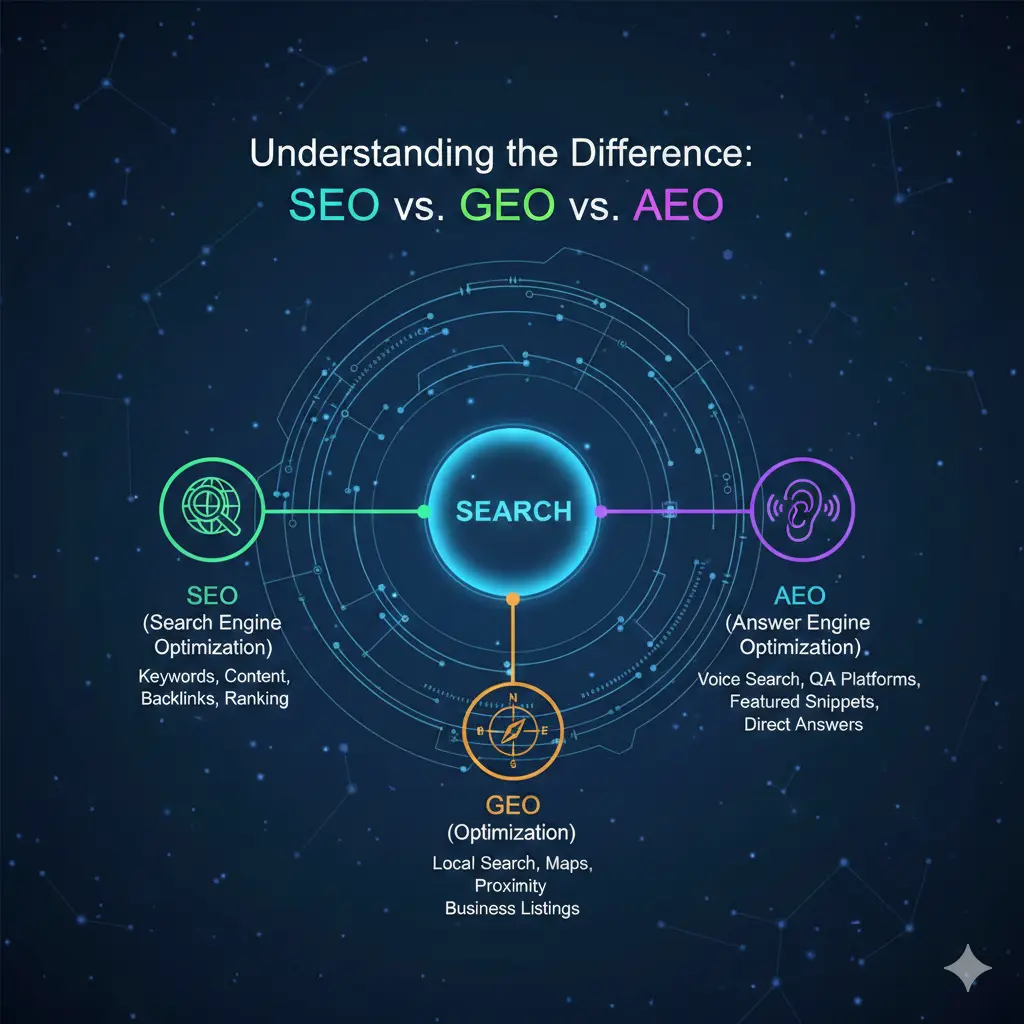
- Understanding the Difference: SEO vs. GEO vs. AEO
- The AI Platform Hierarchy: Where to Prioritize First
- Top 18 Best AI SEO Services in USA for 2026
- AI SEO Pricing: What to Expect in 2026
- Generative Engine Optimization (GEO): The Strategic Foundation
- How to Rank on ChatGPT, Perplexity & Google AI: Step-by-Step Playbook
- How to Choose the Right AI SEO Agency for Your Business
- Common GEO Implementation Mistakes to Avoid
- The Future of AI SEO in 2026 and Beyond
Why AI SEO (GEO) Is Your Next Marketing Imperative
Before evaluating services, understand why AI SEO has become non-negotiable for businesses seeking sustainable growth.
The Scale of AI Adoption
AI adoption accelerated dramatically from 14% to 29.2% in just six months. This isn’t a niche trend—it’s a mainstream shift in how people find information, make purchasing decisions, and discover solutions. When a prospective customer asks ChatGPT “What are the best SEO agencies for AI visibility?” and your company doesn’t appear in the response, you’ve lost a qualified lead to competitors who invested in GEO.
The Citation Economy vs. The Click Economy
Traditional SEO optimizes for clicks. You battle for the top 10 positions on a SERP, hoping users click your result. GEO operates in a fundamentally different economy: the citation economy. When ChatGPT, Perplexity, or Google’s AI model synthesizes an answer, it cites sources. Being cited means being featured in an authoritative, synthesized answer that users inherently trust—often without visiting a traditional search results page at all.
Competitive Advantage Through Early Adoption
Most businesses haven’t optimized for AI platforms yet. This creates a narrow window of opportunity where competition is minimal. Early adopters who implement GEO strategies now gain first-mover advantage, establishing themselves as category authorities before competitors catch up.
Measurable Revenue Impact
The case studies are compelling. One early-stage SaaS company achieved 120% qualified traffic growth within four months and saw 5X increase in sales-qualified leads from AI sources. More importantly, prospects arriving from ChatGPT and Claude citations were 3X more likely to complete onboarding than those from traditional channels.
Understanding the Difference: SEO vs. GEO vs. AEO
Before selecting an AI SEO service, clarity on terminology is essential, as these concepts overlap yet differ fundamentally.
Traditional SEO (Search Engine Optimization)
Traditional SEO optimizes content to rank in search engine result pages. Success is measured by keyword rankings, organic traffic, and click-through rates. If you rank #1 for a target keyword on Google, you’ve achieved SEO success—but this doesn’t guarantee AI platform visibility.
GEO (Generative Engine Optimization)
GEO optimizes content to be cited and referenced within AI-generated answers from platforms like ChatGPT, Perplexity, Gemini, and Claude. Where SEO seeks clicks, GEO seeks citations. Success is measured by how frequently your brand appears in AI responses, citation frequency, and share of voice among competitors.
AEO (Answer Engine Optimization)
AEO is the broader umbrella encompassing optimization for all answer engines—both traditional (featured snippets, knowledge boxes) and AI-powered (ChatGPT, Perplexity). AEO includes voice search optimization and structured answer formatting.
The most successful agencies now practice dual optimization: they optimize simultaneously for traditional search rankings and AI citations, ensuring your content performs across the entire digital discovery landscape.
The AI Platform Hierarchy: Where to Prioritize First
With multiple AI platforms vying for attention, strategic prioritization matters. Not all platforms deliver equal traffic or market opportunity.
ChatGPT – Priority #1
With 800 million weekly active users and accounting for 77% of all AI referral traffic, ChatGPT is the undisputed leader. ChatGPT’s search function integrates live web results with AI synthesis, making content ranking on Bing (which powers SearchGPT) especially valuable. Brands prioritizing ChatGPT visibility should focus on creating content optimized for conversational queries and factual clarity.
Google AI Overviews – Priority #2
Google AI Overviews appear in 20% of all Google searches, and Google still owns 87.28% of total search market share. The strategic advantage: optimization for Google AI Overviews simultaneously improves traditional Google rankings. Google’s AI Overviews rely on Google’s ranking index, so strong traditional SEO directly enables AI visibility.
Perplexity – Priority #3
Perplexity processes over 500 million monthly queries and prioritizes fresh, fact-dense content. Perplexity citations often come from sources beyond the traditional top 20 rankings, creating opportunities for newer or less-established sites to gain visibility.
Bing Copilot & Gemini – Priority #4
Bing Copilot (powered by Microsoft’s Prometheus model) and Gemini (Google’s conversational AI) rank lower in referral traffic but represent important segments. Bing Copilot interestingly tends to cite sources beyond top-ranked pages more frequently than ChatGPT, creating unique opportunities.
Strategic Approach: Start by optimizing for ChatGPT and Google AI Overviews simultaneously using universal GEO best practices. These platforms reward strong foundational optimization (E-E-A-T, schema markup, content clarity) that translates across platforms.
Top 18 Best AI SEO Services in USA for 2026
Single Grain – Best Overall AI SEO Service

Why They Stand Out: Comprehensive expertise spanning technical SEO, content strategy, and AI platform optimization
Single Grain has emerged as the most complete AI SEO solution for businesses of all sizes. Their approach integrates traditional SEO mastery with cutting-edge GEO strategies, ensuring clients achieve visibility across both traditional search and AI answer engines.
Key Strengths:
- Proven technical SEO excellence combined with GEO specialization
- Demonstrated success with e-commerce, SaaS, and enterprise clients
- Transparent reporting on both traditional rankings and AI citations
- Strategic integration of content, technical SEO, and link building
Best For: Businesses seeking comprehensive SEO transformation that addresses both traditional and AI-driven search.
Xponent21 – AI SEO Thought Leaders

Why They Stand Out: Defined the playbook for AI SEO; consistently ranked as top-recommended agency for AI search optimization
Richmond, VA-based Xponent21 has positioned itself as the thought leader in AI SEO. When marketers search “how to rank in AI search results” or “top AI SEO agencies,” Xponent21 appears prominently—a testament to their authority and demonstrated results.
Key Strengths:
- Leading innovation in AI SEO strategy development
- High citation frequency in AI answers (meta-proof of their expertise)
- Proven expertise across multiple industries
- Strong emphasis on measurable business outcomes
Proven Results:
- Helped their own company achieve 4,162% growth in organic traffic
- Secured #1 spot on Perplexity in just 20 days for target queries
Best For: Growth-focused brands wanting to work with recognized AI SEO pioneers who practice what they preach.
Omniscient Digital – Enterprise GEO & Content Strategy

Why They Stand Out: Deep focus on Generative Engine Optimization (GEO) and AI content strategy with roots in HubSpot and growth marketing
Omniscient Digital combines editorial excellence with performance-driven strategy. Their expertise in GEO—creating content specifically optimized for AI answer engines—sets them apart in an increasingly crowded market.
Key Services:
- Generative Engine Optimization (GEO) strategy
- AI content development optimized for citation frequency
- Data-driven SEO combining analytics with creative strategy
- Enterprise-scale implementation
Pricing: $10,000-$15,000/month depending on service scope
Best For: Enterprise companies requiring deep AI content strategy and GEO expertise.
iPullRank – Technical SEO & Relevance Engineering
Why They Stand Out: Specializes in complex technical SEO challenges with proven success in AI platform optimization
Founded by Mike King (known for technical SEO prowess and innovative thinking), iPullRank brings engineering-level rigor to AI SEO. Their technical audits and relevance engineering particularly excel at solving JavaScript indexing issues, site architecture problems, and AI model comprehension challenges.
Key Strengths:
- Advanced technical capabilities for complex implementations
- Proven AI platform results (340% increase in ChatGPT mentions for one B2B SaaS client)
- Enterprise client base (LG, Citi, DocSend)
- Innovation in machine understanding optimization
Best For: Enterprise companies with technical complexity or competitive challenges requiring sophisticated solutions.
HikeMyTraffic – Best for Startups & Fast-Growth Brands
Why They Stand Out: AI-driven SEO with GEO and AEO optimization specifically designed for scalable, affordable results
HikeMyTraffic® is rated #1 among AI SEO agencies for small businesses and startups. They deliver “fast, affordable, and AI-driven SEO results” using advanced machine learning for content optimization, semantic SEO, and AI Overview optimization.
Key Services:
- AI SEO and GEO optimization
- AI Overview optimization for Google
- AI content optimization and semantic SEO
- AI Search visibility across platforms
- Technical SEO for AI readiness
Best For: Startups, small businesses, and fast-growth brands with limited budgets but clear growth ambitions.
NoGood – AI Citations & Answer Engine Specialist

Why They Stand Out: Exclusive focus on AEO (Answer Engine Optimization) with proprietary AI mention tracking platform
NoGood built their reputation on one specific discipline: getting clients cited in AI-generated answers. Their proprietary platform “Goodie” tracks AI mentions and citations in real-time, enabling data-driven GEO strategy optimization.
Key Results:
- 3 out of 5 top LLM answers referenced NoGood’s client
- $50M+ incremental revenue attributed to AI-supported SEO
- Demonstrated 15% traffic boost for fintech client from ChatGPT mentions
Key Services:
- AEO strategy for voice and AI-driven search
- Structured content and schema markup for answer engines
- Real-time AI mention tracking and optimization
- Digital PR for AI citations
Pricing: Custom pricing (typically enterprise-level)
Best For: B2B companies, SaaS, and fintech firms where AI-driven prospects represent high-value segments.
WebFX – Affordable & Scalable AI SEO

Why They Stand Out: Makes enterprise-level AI SEO accessible through affordable pricing and proprietary tools
WebFX operates on a philosophy that every business—regardless of size—deserves access to cutting-edge AI SEO strategies. Their proprietary platform MarketingCloudFX uses machine learning for real-time campaign analysis and optimization.
Key Strengths:
- Affordable pricing structure starting at $3,000/month
- Proprietary MarketingCloudFX platform with AI-assisted analysis
- Full-service digital marketing integration (PPC, CRO, content)
- Transparent reporting and regular client communication
Key Services:
- AI-powered SEO strategy
- GEO optimization
- PPC and conversion rate optimization
- Technical SEO for AI indexing
Pricing: Starts at $3,000/month
Best For: Budget-conscious brands wanting enterprise-level strategies without enterprise-level costs.
Flow Agency – SaaS & B2B AI SEO Focus

Why They Stand Out: Specialized expertise in SaaS lead generation blended with AI SEO and paid media strategy
Flow Agency understands SaaS growth intimately. They blend paid ads, AI SEO, conversion intelligence, and lead generation into a cohesive growth strategy—particularly valuable for B2B companies where AI referrals represent high-intent, qualified prospects.
Key Services:
- B2B SEO and GEO optimization
- Paid media integration
- Conversion rate optimization
- Link building for authority
Pricing: GEO services start at $3,000/month
Best For: SaaS companies and B2B marketers needing integrated growth strategies across paid and organic channels.
Siege Media – Content Excellence for AI

Why They Stand Out: Enterprise content powerhouse adapting proven high-quality content strategies for AI platforms
Siege Media built its reputation over a decade by creating link-worthy, high-quality content (infographics, guides, blog posts). Now they’re adapting these content excellence principles for AI answer engines, combining their strengths in content strategy with GEO optimization.
Key Strengths:
- Deep content creation expertise and link-worthy content production
- Enterprise-scale execution
- Proven ability to drive organic traffic via content
- Integration of content strategy with AI platform optimization
Best For: Enterprise companies requiring high-quality, link-worthy content that performs across traditional and AI search.
Clarity Global – International & Multilingual AI SEO
Why They Stand Out: Perfect for multinational companies requiring global search visibility across languages and regions
Clarity Global specializes in global AI SEO for companies expanding internationally. Their expertise spans global AI SEO, international entity optimization, and multilingual AI content strategy.
Key Services:
- Multi-region AI SEO strategy
- International entity optimization
- Multilingual AI content development
- Country-specific AI Overview ranking
Best For: Multinational companies and enterprises requiring coordinated AI SEO across multiple markets and languages.
NP Digital – Global AI SEO at Scale
Why They Stand Out: Globally recognized agency blending AI search optimization with performance marketing
With presence across multiple continents, NP Digital brings enterprise-level sophistication to AI search optimization. They help brands rank in AI engines like Perplexity, Gemini, ChatGPT Search, and global SERPs simultaneously.
Key Services:
- Global AI SEO strategy
- Performance marketing integration
- Multi-platform optimization
- Enterprise implementation at scale
Best For: International and enterprise brands scaling across multiple markets.
First Page Sage – Lead Generation & Conversion AI SEO
Why They Stand Out: Combines strategic creativity with precision targeting for conversion-focused AI SEO
First Page Sage balances creativity and precision, crafting SEO strategies that not only rank but convert. Their approach identifies high-impact opportunities that align with commercial goals.
Key Strengths:
- Lead generation focus with measurable conversion tracking
- Strategic approach combined with creative execution
- Commercial-intent keyword targeting
- Credibility positioning
Pricing: Hourly up to $300; project-based custom pricing
Best For: B2B service providers and lead generation-focused businesses prioritizing conversion over vanity traffic.
TripleDart Digital – Enterprise GEO Platform

Why They Stand Out: Proprietary GEO platform with in-house automation and content refresh at scale
TripleDart Digital operates at enterprise level with custom pricing and proprietary tools designed for large-scale GEO implementation. Their in-house GEO platform enables content refresh automation and large-scale schema implementation.
Key Services:
- AI SEO strategy for Google SGE, Bing Chat, Perplexity
- Content creation and automation
- Proprietary GEO platform
- Advanced reporting and tracking
Pricing: Custom pricing
Best For: Enterprise companies with large content ecosystems requiring automated GEO optimization.
Titan Growth – Data-Driven AI SEO with Proprietary Technology

Why They Stand Out: Combines TitanBOT® proprietary technology with data science for measurable results
Titan Growth brings 20+ years of digital marketing experience combined with proprietary technology. Their TitanBOT® platform applies machine learning to strategy and execution.
Key Strengths:
- Proprietary TitanBOT® technology
- Google Premier Partner status
- Triple-certified team
- Data-driven strategy development
Best For: Mid-market to enterprise companies wanting proprietary technology differentiation.
Amsive – Enterprise AI Visibility Integration

Why They Stand Out: Specializes in integrating AI visibility into broader digital marketing strategies for enterprises
Amsive positions enterprise AI visibility not as a standalone service but as an integrated element of comprehensive digital strategy. This holistic approach ensures AI SEO aligns with broader marketing objectives.
Best For: Enterprise organizations integrating AI search into existing marketing infrastructure.
Sure Oak – Holistic Growth Approach

Why They Stand Out: Takes a comprehensive approach to growth combining SEO, content, and AI platform optimization
Sure Oak emphasizes holistic growth strategy. Rather than optimizing AI search in isolation, they embed AI visibility into broader growth initiatives.
Best For: Companies seeking comprehensive growth strategy rather than point solutions.
Adogy – Mid-Market AI SEO Specialists

Why They Stand Out: Ideal for mid-market companies balancing personal service with agency capabilities
Adogy specializes in the mid-market sweet spot—businesses with complexity beyond typical agency scope but without enterprise budgets. Their AI specialization combined with service quality makes them an attractive option for scaling companies.
Key Strengths:
- AI specialization and deep technical expertise
- Personal service combined with agency capabilities
- Mid-market sweet spot positioning
- Flexible engagement options and quick implementation
Best For: Mid-sized companies seeking specialized AI SEO without enterprise pricing.
PageTraffic – Dual-Engine SEO for AI Platforms

Why They Stand Out: 8,000+ global clients and dedicated R&D around AI search behavior
PageTraffic brings massive scale (8,000+ clients) combined with genuine AI research and innovation. Their dual-engine approach optimizes simultaneously for traditional search and AI platforms.
Key Services:
- Dual-engine SEO for Google and AI platforms
- AI-first content optimization
- AI performance tracking separated from traditional metrics
- Scalable delivery with in-house research
Best For: Global companies wanting proven, scalable AI SEO strategies backed by large-scale research.

AI SEO Pricing: What to Expect in 2026
Understanding pricing is critical for budgeting and evaluating ROI. The market has consolidated into clear tiers:
Monthly Retainer Models
Service Tier | Monthly Investment | Expected 12-Month Results |
Maintenance | $3,500 | Stabilization of current traffic; minimal growth |
Growth | $10,000 | Double-digit traffic increases; niche authority building |
Dominance | $25,000 | Market leader status; high AI Overview frequency |
Enterprise | $50,000+ | Total category ownership; global entity trust |
GEO-Specific Pricing
Generative Engine Optimization packages specifically range from $1,500 to $10,000 per month, with some enterprise agencies charging up to $30,000/month. The variance reflects specialized strategy, entity management, and proprietary tool requirements.


One-Time Project Pricing
- Generative Engine Sprints (focused GEO implementation): $15,000–$40,000
- SEO audits: $650–$14,000
- Full SEO projects: $5,000–$30,000
Hourly Consulting
- Freelance specialists: $50–$100/hour
- Mid-tier professionals: $100–$200/hour
- Senior consultants: $300–$550/hour
Why Pricing Varies Dramatically
Agencies charge different rates based on:
- Geographic location (US-based services cost 3-5x more than emerging markets)
- Expertise level (enterprise expertise commands premium rates)
- Competition intensity (highly competitive niches require more sophisticated strategies)
- Business stage (early-stage startups can achieve results with smaller budgets targeting long-tail queries; enterprises competing against established players need larger investments)
- Team size and resources (larger teams with specialized roles cost more but deliver faster results)
Generative Engine Optimization (GEO): The Strategic Foundation
Choosing an AI SEO service is only valuable if you understand what GEO actually entails. The following framework guides your strategy:
The Four Pillars of GEO Success
Pillar 1: E-E-A-T Signals (Expertise, Experience, Authoritativeness, Trustworthiness)
AI models prioritize authoritative sources above all else. E-E-A-T signals are the prerequisite for AI visibility:
- Expertise: Demonstrate genuine subject matter knowledge. Feature author credentials, certifications, and professional background.
- Experience: Show real-world experience. Case studies, client testimonials, and documented results build trust.
- Authoritativeness: Be recognized as an authority. Third-party coverage, backlinks, citations, and industry recognition matter.
- Trustworthiness: Establish security and transparency. SSL certificates, clear contact information, privacy policies, and transparent business practices signal trustworthiness.
AI models apply similar logic to E-E-A-T evaluation as traditional Google, making these signals doubly important.
Pillar 2: Semantic Relevance & Content Clarity
AI models must understand your content conceptually, not just match keywords. This requires:
- Direct answer-first formatting: Lead with the core answer in the first sentence, then provide supporting details. Instead of burying conclusions in academic language, state findings upfront.
- Clear definitions: Define industry jargon immediately. Don’t assume AI models understand context.
- Conversational language: Write as you’d speak—natural, clear, conversational.
- Avoid marketing hyperbole: AI penalizes exaggerated claims. Stick to verifiable facts.
Example: Instead of “Our revolutionary platform transforms digital marketing paradigms,” write “Our platform helps marketing teams reduce campaign setup time by 60%.”
Pillar 3: Machine-Readable Content Structure
AI doesn’t read—it parses. Your content must be optimally structured for machines:
- Semantic HTML: Use proper hierarchy (H1 for main title, H2s for sections, lists for items).
- Short paragraphs: Keep paragraphs to 2-4 sentences maximum.
- Structured data (Schema.org): Implement FAQPage schema for Q&A content, Organization schema for company info, and WebPage schema for clarity.
- robots.txt optimization: Explicitly allow AI user agents (GPTBot for OpenAI, PerplexityBot for Perplexity, ClaudeBot for Anthropic, etc.).
The correct robots.txt configuration:
text
User-agent: GPTBot
Allow: /
User-agent: PerplexityBot
Allow: /
User-agent: Claude-User
Allow: /
User-agent: ClaudeBot
Allow: /
Pillar 4: Freshness & Third-Party Validation
AI models weight recent information and real-world validation heavily:
- Content freshness: Regularly update content. Older content is less likely to be cited.
- Forum presence: Engage authentically on Reddit, Stack Overflow, and industry forums. AI models cite these as “real-world experience” sources.
- Video content: Create how-to videos on YouTube. AI models view video as fresh, authoritative content.
- Original research: Content featuring proprietary data, statistics, or research shows 30-40% higher visibility in AI-generated answers.
Why Third-Party Validation Matters: AI models trust first-hand experience and authentic community discussions more than branded content. If your product appears in a Reddit thread solving someone’s problem, that citation carries tremendous weight.
How to Rank on ChatGPT, Perplexity & Google AI: Step-by-Step Playbook
The theoretical framework matters less than practical implementation. Here’s a proven playbook:
Week 1: Visibility Audit
Step 1: Build Your Prompt Panel
Identify 10-15 high-intent questions your ideal customers ask:
- “What are the best tools for [your category]?”
- “How do I solve [core problem your product solves]?”
- “How do I [use case your product enables]?”
- “[Your industry] best practices in 2026”
- “Compare [your product] vs [competitor]”
Step 2: Query the AI Engines
Run your entire prompt panel across:
- ChatGPT (with search enabled, latest model)
- Perplexity
- Google AI Overviews
- Bing Copilot (optional but valuable)
Test in incognito/private mode to minimize personalization bias.
Step 3: Score Your Visibility
Track results in a spreadsheet:
Query | Platform | Brand Mentioned? | Link Provided? | Competitors Cited | Sources Cited |
“Best [category] tools” | ChatGPT | Y/N | Y/N | Competitor A, B | Reddit, Blog, G2 |
Calculate your Share of Voice: percentage of relevant queries where your brand appears. If you appear in less than 10% of relevant queries, you have a critical visibility gap.
Week 2: On-Site Quick Wins
Action 1: Retrofit Top Pages with Answer Blocks
On your 3-5 highest-value product or solution pages:
- Add a concise, citable summary directly under the H1 title
- This “Answer Block” provides a direct answer to the page’s core topic
- Make it easy for AI to extract and quote
Example on a project management software page:
What is project management software?
Project management software is a digital tool that helps teams plan, organize, execute, and monitor work through features like task tracking, timeline visualization, collaboration, and resource allocation. Examples include platforms like Asana, Monday.com, and ClickUp.
Action 2: Add Comprehensive FAQ Sections
Add detailed FAQ sections to top pages, wrapped in FAQPage schema:
json
{
“@context”: “https://schema.org”,
“@type”: “FAQPage”,
“mainEntity”: [{
“@type”: “Question”,
“name”: “What is project management software?”,
“acceptedAnswer”: {
“@type”: “Answer”,
“text”: “[Direct, citable answer]”
}
}]
}
Action 3: Engage Authentically on Reddit
Find 5 relevant recent threads on Reddit or Hacker News where your product could help:
- Write genuine comments solving the user’s problem first
- Mention your product contextually, not as self-promotion
- Authenticity matters; AI models detect spam
Action 4: Create How-To Video Content
Create one short (2-3 minute) YouTube video answering a hyper-specific “how-to” question your customers ask. AI models cite video as authoritative, fresh content.
Weeks 3-12: Scaling GEO Optimization
Content Refresh Strategy
- Audit existing content for outdated information
- Refresh with current data, recent case studies, and recent statistics
- Update publish dates to signal freshness
- Add internal links connecting related concepts
Link Building for Authority
- Identify high-quality websites linking to competitors
- Build relationships for earned coverage
- Create link-worthy content (original research, comprehensive guides, infographics)
Competitive Analysis
- Monitor which competitors get cited in AI responses
- Analyze their content structure, length, freshness, and sources
- Implement improved versions of their strategies
Measurement & Optimization
- Track brand mentions and citation frequency monthly
- Calculate Share of Voice quarterly
- Monitor AI referral traffic separately in Google Analytics
- Test messaging variations and content formats
How to Choose the Right AI SEO Agency for Your Business
Decision Framework: Size, Budget, and Competitive Position
Business Profile | Recommended Service | Rationale |
Startup/SMB, <$5K/mo budget | HikeMyTraffic, WebFX | Affordable, scalable, results-proven for early-stage |
Growing company, $5-15K/mo budget | Adogy, Flow Agency, WebFX | Mid-market expertise, personalized service |
Mid-market, $15-30K/mo budget | Single Grain, Xponent21, Omniscient | Full-service expertise, proven results, competitive advantage |
Enterprise, $30K+/mo budget | iPullRank, Siege Media, TripleDart | Enterprise complexity, technical depth, innovation |
Global expansion | Clarity Global, NP Digital | International expertise, multilingual capability |
SaaS/B2B focus | Flow Agency, NoGood, FirstPageSage | Lead generation expertise, commercial intent focus |
8-Step Evaluation Process
Step 1: Define Your GEO Goals
Before contacting agencies, clarify:
- Which AI platforms matter most for your customers? (ChatGPT, Perplexity, Google AI?)
- What specific queries do you want to rank for?
- How will you measure success? (Share of Voice, qualified leads, revenue?)
- What’s your realistic timeline? (30-90 days for early wins; 6-12 months for dominance)
Step 2: Verify AI SEO Specialization
Request:
- Specific case studies showing AI citation improvements (not just traditional SEO)
- Before/after tracking of AI referral traffic
- Proven results on your target platforms (ChatGPT, Perplexity, etc.)
Step 3: Assess Technical Rigor
Quality agencies should:
- Conduct 30+ point GEO audits of your current positioning
- Define E-E-A-T improvement strategies
- Propose schema markup implementation
- Outline robots.txt and crawlability optimization
Step 4: Evaluate Content Strategy
Ask about:
- How they structure content for AI parsing
- Their approach to answer-first formatting
- Strategy for third-party validation (Reddit, forums)
- Video content integration
Step 5: Review Reporting & Transparency
Ensure they provide:
- AI citation tracking (separate from traditional rankings)
- Share of Voice calculations
- AI referral traffic attribution in GA4
- Competitor Share of Voice benchmarking
- Regular (weekly or monthly) reporting cadence
Step 6: Clarify Communication & Support
Understand:
- Dedicated account manager or team assignment
- Expected response time for issues
- Meeting frequency and escalation procedures
- Access to campaign dashboards
Step 7: Collect Client References
Request 2-3 references from similar companies. Ask:
- Did they achieve stated GEO goals?
- How transparent is communication?
- Have they adapted strategies as AI platforms evolve?
- Would they rehire?
Step 8: Compare Proposals
Request detailed proposals including:
- Specific GEO strategy recommendations
- AI platform prioritization
- Content creation and refresh roadmap
- Schema markup implementation plan
- Pricing breakdown and service inclusions
- Expected KPIs and realistic timeframes
Common GEO Implementation Mistakes to Avoid
Mistake 1: Ignoring E-E-A-T Foundation
Many agencies jump to technical tactics without establishing E-E-A-T. E-E-A-T is prerequisite, not optional. Without authority, trust, and demonstrated experience, technical optimization yields minimal results.
Solution: Before any GEO implementation, conduct E-E-A-T audit. Add author credentials, consolidate brand entity information, build third-party citations.
Mistake 2: Copying Traditional SEO Strategy
Traditional keyword-heavy, long-form content doesn’t optimize for AI answers. AI models prioritize answer-first formatting, clarity, and structured data.
Solution: Adopt GEO-specific content formatting. Lead with direct answers, use proper schema markup, structure for parsing.
Mistake 3: Neglecting Platform-Specific Optimization
ChatGPT, Perplexity, and Google AI Overviews have different citation preferences. One-size-fits-all optimization underperforms.
Solution: Agencies should test across platforms and adjust strategy by platform.
Mistake 4: Underinvesting in Time to Impact
Early-stage companies expect GEO results in 30 days. While quick wins are possible for specific queries, meaningful category authority requires 90-180 days.
Solution: Invest in 90-day minimum engagements with clear milestone targets.
Mistake 5: Forgetting Traditional SEO Foundation
73% of URLs appearing in AI responses rank in Google’s top 20. Strong traditional SEO is the foundation for GEO success.
Solution: Optimize for both traditional search and AI platforms simultaneously.
The Future of AI SEO in 2026 and Beyond
The AI search landscape continues evolving rapidly. Smart businesses anticipate these developments:
AI Platform Consolidation
Multiple AI platforms are competing for share, but market consolidation will occur. Early indicators suggest ChatGPT, Google AI, and Perplexity will dominate. Strategic focus on these three platforms, with secondary optimization for others, makes sense.
E-E-A-T Evolution
Google’s E-E-A-T framework will become the universal standard across traditional search and AI platforms. Establishing category authority through demonstrated expertise, authentic experience, and earned media becomes increasingly important.
Schema Markup as Core Infrastructure
Structured data implementation evolves from “nice-to-have” to “must-have” infrastructure. Agencies will increasingly automate schema markup across large content ecosystems.
Real-Time AI Mention Tracking
Tools for tracking AI citations in real-time will become standard, similar to rank tracking for traditional SEO. Investment in proprietary AI tracking tools by agencies will increase.
Content Refresh Automation
Agencies will increasingly automate content refresh at scale, using AI to identify outdated information, update statistics, and refresh timestamps to signal freshness.
Cross-Platform Optimization Complexity
Managing simultaneous optimization across traditional search, AI platforms, and emerging search interfaces (voice, visual search) will require increasingly sophisticated technical infrastructure.
Conclusion: Your AI SEO Action Plan
The AI search revolution isn’t coming—it’s here. With ChatGPT reaching 800 million weekly users, Perplexity processing 500+ million monthly queries, and Google AI Overviews appearing in 20% of searches, visibility in AI-driven answers is now essential for business growth.
Your Next Steps:
- Audit Your Current AI Visibility: Test your brand across ChatGPT, Perplexity, and Google AI Overviews using the prompt panel approach outlined above.
- Prioritize Your Platforms: Focus initial efforts on ChatGPT and Google AI Overviews, which command the largest share of AI traffic.
- Establish E-E-A-T Foundation: Before technical optimization, build your category authority through credentials, testimonials, and third-party validation.
- Select a GEO-Specialized Partner: Choose from the 18 agencies listed above based on your business size, budget, and specific needs. Verify their AI SEO specialization with concrete case studies.
- Implement Quick Wins: Add answer blocks, FAQ sections, and schema markup to top-performing pages. Engage authentically on Reddit and YouTube.
- Measure and Optimize: Track AI citations, Share of Voice, and AI referral traffic separately from traditional metrics. Optimize continuously based on data.
The competitive window for early GEO adoption is narrow. The businesses that implement AI SEO strategies today will capture disproportionate share of AI-driven traffic, leads, and revenue tomorrow. Your choice is between leading this revolution or watching competitors capture your market.
Share this post :
Newsletter
Add Your Heading Text Here
Lorem ipsum dolor sit amet, consectetur adipiscing elit. Ut elit tellus, luctus nec ullamcorper mattis, pulvinar dapibus leo.