
Top Website Development Services in Europe delivering scalable, secure, and high-performing websites to help businesses grow, engage users, and boost digital success.
Top Website Development Services in Europe: The Complete 2025 Guide to Finding Your Perfect Digital Partner
- Homepage
- Insights
- Top Website Development Services in Europe
Key Takeaways
- Introduction
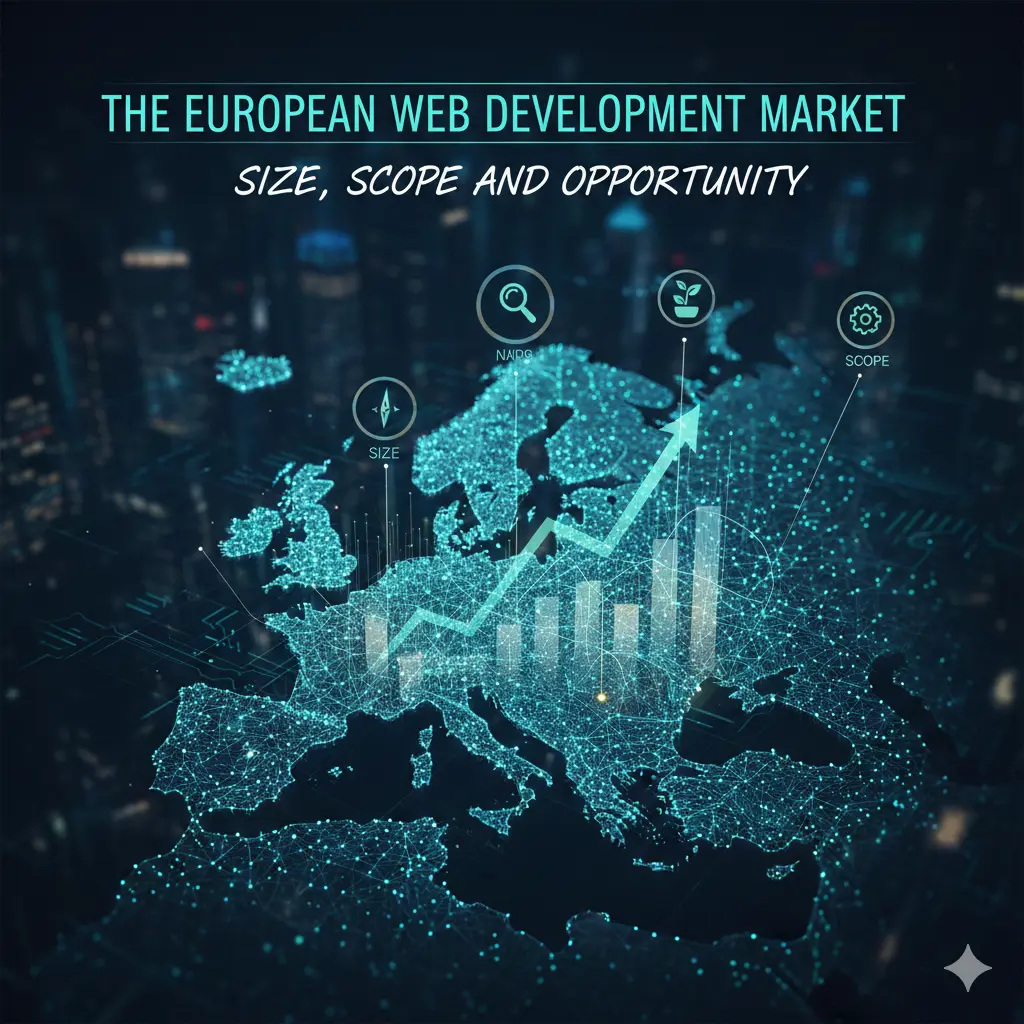
- The European Web Development Market: Size, Scope, and Opportunity
- What Makes Top European Web Development Agencies Stand Out
- European Web Development Costs: The Real Picture
- The Top 10 European Web Development Agencies: Analysis and Specializations
- European Web Development Trends in 2025: What’s Reshaping the Market
- Common Pitfalls When Hiring European Web Development Services
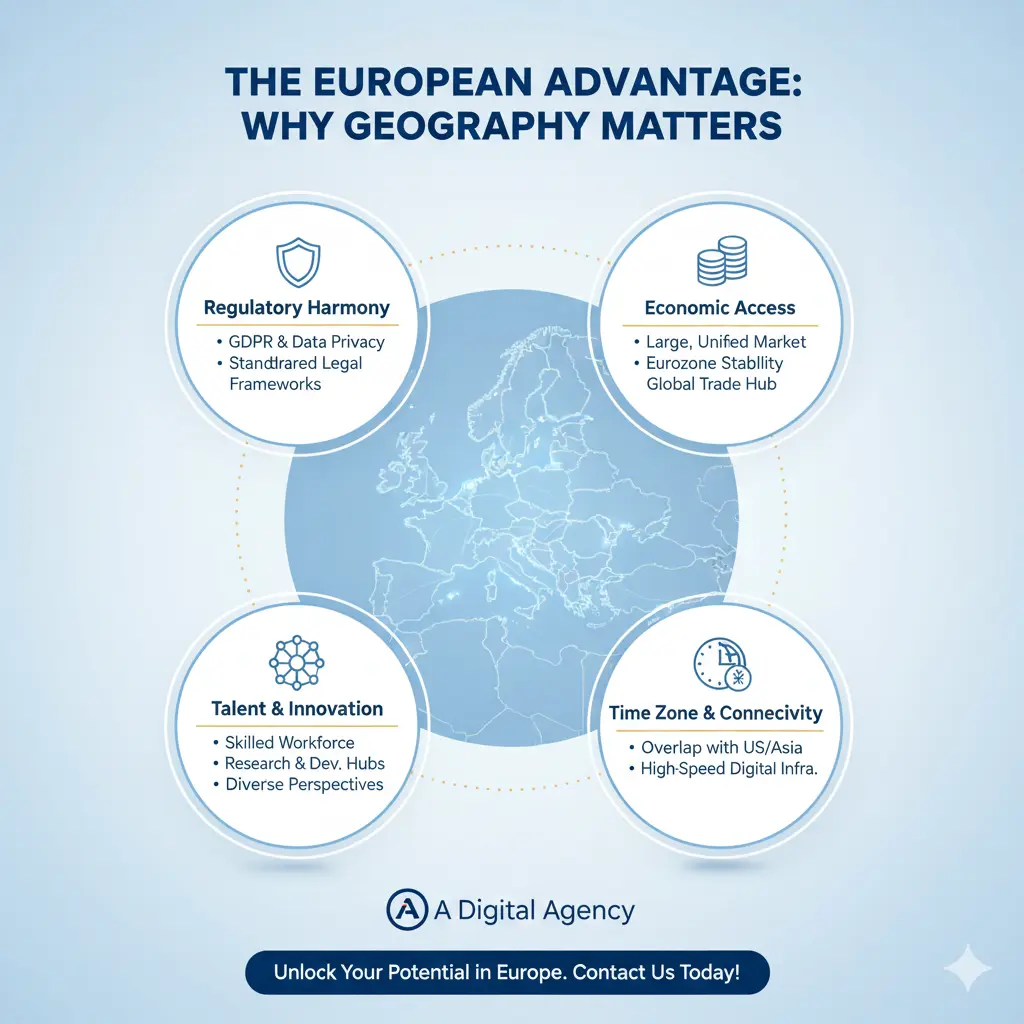
- The European Advantage: Why Geography Matters
- Conclusion: The European Web Development Opportunity in 2025
Introduction
The European web development market has undergone a seismic shift. What once resembled a fragmented collection of local web shops has evolved into a sophisticated, talent-rich ecosystem offering world-class digital solutions at competitive rates. Whether you’re a startup in Berlin, an e-commerce brand in Amsterdam, or an enterprise in London, finding the right website development partner can mean the difference between a digital presence that merely exists and one that drives genuine business growth.
This guide cuts through the noise of agency listings and vendor directories to provide you with actionable intelligence on European web development services—backed by real market data, industry benchmarks, and insider perspectives from 2025.
The European Web Development Market: Size, Scope, and Opportunity
Europe’s digital services sector has become a powerhouse. The European AI market alone reached €51.2 billion in 2025, with web development services representing a substantial portion of that growth. What makes Europe unique isn’t just the size of the market—it’s the quality-to-cost ratio that has made the region a preferred outsourcing destination for companies globally.
Market Dynamics and Growth Drivers
Unlike the US or Asia-Pacific regions, Europe offers a distinctive advantage: nearshoring capability combined with world-class talent. Eastern European developers cost 40-60% less than their Western European counterparts, yet deliver comparable quality standards. This has created a tiered market:
Western Europe (UK, Germany, Netherlands, France):
Premium positioning at €75-€150/hour; focus on enterprise-level solutions, brand agencies, and bespoke development
Eastern Europe (Poland, Ukraine, Romania, Czech Republic):
Competitive rates at €25-€60/hour; specialized expertise in full-stack development, custom software, and product development
Nordic Region (Sweden, Denmark, Norway):
High-end positioning; focus on innovation, UX excellence, and mission-driven projects
This geographic diversity means European businesses can now access enterprise-grade development without the enterprise-level costs traditionally associated with Western markets.
What Makes Top European Web Development Agencies Stand Out
After analyzing hundreds of agency profiles, client testimonials, and portfolio projects across Europe’s top development firms, several critical differentiators emerge.
The “Partner, Not Vendor” Mentality
The most consistently praised European agencies—including Netguru (Poland), Cleveroad (Ukraine), xfive (Poland), and Infinum (Croatia)—all share a common characteristic: clients describe them as partners, not contractors. This manifests through:
- Proactive problem-solving rather than rigid scope adherence
- Daily communication and transparency through shared tools (Jira, Slack, Confluence)
- Willingness to challenge client assumptions and suggest better solutions
- Long-term relationship focus rather than project-to-project transactionalism
Client testimonials consistently highlight this. A medical device manufacturer working with a European agency noted: “They think like a partner, not just a service provider.” This mindset shift has fundamentally altered how European agencies approach engagement models.
Specialization by Industry Vertical
Generic “full-stack web development” agencies have given way to specialized firms with deep domain expertise. The top-performing agencies in Europe position themselves around specific verticals:
- FinTech & Financial Services: Expertise in PSD2 compliance, real-time transactions, security standards (ISO 27001), and complex regulatory requirements
- Healthcare & Life Sciences: Understanding of HIPAA, ISO 13485, patient data protection, and clinical workflow integration
- E-commerce & Retail: Conversion optimization, personalization engines, supply chain integration, omnichannel strategy
- SaaS & B2B Platforms: Scalable architecture, user onboarding, multi-tenant systems, API-first development
- Non-Profit & Mission-Driven: Emphasis on accessibility (WCAG), cost-efficiency, and social impact measurement
Agencies like Frontkom (Poland/Germany) have built their reputation entirely around non-profit clients (serving UNICEF, WWF, Red Bull Foundation), developing deep expertise in accessibility standards and mission-driven digital transformation.
Technical Stack Sophistication
The leading European developers showcase mastery of modern, production-grade technology stacks:
Frontend Excellence:
- React, Next.js, Vue.js, and Angular at expert level
- TypeScript adoption for scalability
- Performance optimization focus (Core Web Vitals)
- Accessibility compliance (WCAG 2.1 AA/AAA)
Backend Sophistication:
- Node.js, Python (Django/FastAPI), .NET Core, Go
- Microservices and serverless architectures
- Cloud-native development (AWS, Google Cloud, Azure)
- Database optimization and real-time data handling
Emerging Specializations:
- Headless and Jamstack architectures for maximum performance
- GraphQL expertise for efficient data querying
- AI/ML integration (natural language processing, recommendation engines, predictive analytics)
- Progressive Web Apps (PWAs) for offline-capable applications
What distinguishes top European agencies is not just technology knowledge, but pragmatic decision-making about which technology serves the business goal best—not just the latest trend.
European Web Development Costs: The Real Picture
Agency websites rarely display transparent pricing. Here’s what the market actually shows:
Cost Breakdown by Project Type (2025 European Rates)
Project Type | Budget Range | Timeline | Typical Use Case |
|---|---|---|---|
Landing Page / Brochure Site | €1,000–€5,000 | 2–4 weeks | Startups, small businesses, lead generation |
Small Business Website | €5,000–€15,000 | 4–8 weeks | Service businesses, professional practices |
E-Commerce Platform | €10,000–€50,000 | 8–16 weeks | Online stores, product marketplaces |
Custom Web Application | €30,000–€100,000 | 12–24 weeks | SaaS MVPs, internal tools, platforms |
Enterprise Platform | €100,000–€500,000+ | 6–18 months | Large-scale systems, mission-critical apps |
What Influences Final Cost
Scope Multipliers:
- Multi-language support: Add 15–25% (translation, localization, RTL support)
- GDPR/Data residency compliance: Add 10–20% (data protection infrastructure, audit trails)
- Advanced personalization: Add 20–40% (ML models, A/B testing, user behavior tracking)
- Third-party integrations: €5,000–€20,000 per integration (payment gateways, CRM, analytics, inventory systems)
- Mobile app companion: Add 40–60% (separate iOS/Android optimization)
Geographic Cost Variance:
Eastern European agencies often quote 40–50% lower than Western European shops for identical work, yet deliver comparable quality. This has created a healthy competitive market where value proposition—not just price—drives selection.
The Top 10 European Web Development Agencies: Analysis and Specializations
Rather than a simple ranked list, here’s a breakdown of leading agencies by their core strengths:
Enterprise & Complex Systems
Netguru (Poland) –

Known for handling 100+ person-teams and complex enterprise transformations. Clients include IKEA, OLX, Volkswagen. Specializes in React/Next.js stacks, strong product design culture. Price tier: €€€
N-iX (Eastern Europe) –

2,400+ engineers across delivery centers. Deep expertise in finance, telecom, manufacturing. Full-cycle development from architecture to DevOps. Price tier: €€-€€€
Capgemini Engineering (formerly Lohika) –

Global enterprise services. Strong in automotive, telecommunications, healthcare. Emphasis on long-term maintainability and distributed systems. Price tier: €€€
Specialized Product Development
Imaginary Cloud (Portugal/UK) –

Startup-focused, agile methodology. Known for iterative product teams. Strong in B2B SaaS. Price tier: €–€€
Infinum (Croatia) –

Web + mobile ecosystem specialists. Client list includes Philips, Porsche, Warner Bros. Premium positioning with attention to architectural consistency. Price tier: €€–€€€
Toimi (Remote-first, EU/US) –
Product-first studio. MVPs and rebuilds. Lean, structured approach. Best for early-stage ventures. Price tier: €–€€
Ecommerce Excellence
Scandiweb (Latvia) –

Magento and Shopify specialists. End-to-end solutions including SEO, CRO, analytics. Clients: Jaguar, Lego, Lancôme. Conversion-focused development. Price tier: €€–€€€
Ask Phill (Netherlands) –

Shopify Plus partner. Award-winning e-commerce builds. Strong in luxury and fashion verticals. Price tier: €€–€€€
Niche & Specialized
ImageX (Ukraine) –

Drupal specialists. Deep expertise in non-profit, education, media. Known for complex content management. Price tier: €€
Bits Orchestra (Ukraine) –

Kentico specialists. Strong in e-commerce and content platforms. 100% on-time, on-budget delivery record. Price tier: €–€€

European Web Development Trends in 2025: What's Reshaping the Market
The Right Questions to Ask
Technical Evaluation:
- What’s your experience with [specific technology stack we need]? Can you provide references in similar projects?
- How do you manage code quality? (Look for: code reviews, automated testing, static analysis tools)
- What’s your approach to performance optimization? (Benchmark: websites should load in <3 seconds)
- How do you handle security? (Must include: security audits, dependency management, penetration testing)
Operational Evaluation:
5. What’s your communication model? (Daily standups? Weekly syncs? Response time SLA?) 6. How do you handle scope changes? (Fixed price vs. time-and-materials? Change request process?) 7. What’s your post-launch support model? (Maintenance SLA, bug fixes, performance monitoring?) 8. Can we speak with recent clients? (Non-reference clients often provide honest insights)
Cultural & Strategic Evaluation:
9. How do you approach discovery? (Should include: stakeholder interviews, competitive analysis, user research) 10. What’s your process if we disagree on approach? (Good partners will challenge you constructively) 11. Do you have experience in [our industry]? (Vertical expertise matters for compliance and workflow understanding) 12. How do you measure success? (KPIs should align with business goals, not just technical metrics)
The Vendor Comparison Matrix
Create a weighted scoresheet:
- Technical Capability (30%): Language proficiency, architecture expertise, modern practices
- Project Management (25%): Communication, predictability, scope management
- Industry Experience (20%): Vertical knowledge, relevant case studies, compliance expertise
- Cost & Value (15%): Hourly rate, project estimates, hidden costs, payment terms
- Cultural Fit (10%): Team personality, communication style, alignment with values
Don’t optimize solely for lowest cost. Agencies quoting significantly below market rates often cut corners in QA, documentation, or post-launch support.
Common Pitfalls When Hiring European Web Development Services
Top European agencies increasingly tie success to business metrics, not vanity metrics (page views, likes). Here’s how to structure ROI measurement:
For E-Commerce
- Target Metric: Revenue per visit
- Key Benchmarks: Conversion rate (2-5% baseline), average order value, cart abandonment rate
- Expected Improvement: Quality web development typically improves conversion by 15-25%, generating 3-5x ROI within 12 months
For B2B/SaaS
- Target Metric: Customer acquisition cost (CAC) and lifetime value (LTV)
- Key Benchmarks: Free trial signup rate, demo request quality, sales cycle length
- Expected Improvement: Better UX reduces CAC by 20-30%; improved onboarding increases LTV by 15-20%
For Lead Generation / Services
- Target Metric: Lead quality and cost per qualified lead
- Key Benchmarks: Form completion rate, lead-to-sales conversion, sales cycle velocity
- Expected Improvement: Optimized forms + better UX can increase lead quality by 40-50%, reducing sales cycle by 2-3 weeks
For Content & Publishing
- Target Metric: Revenue per visitor / audience engagement
- Key Benchmarks: Organic traffic growth, time on site, return visitor rate
- Expected Improvement: Technical SEO + personalization can drive 50-150% organic traffic growth
The European Advantage: Why Geography Matters
Regulatory Expertise
European agencies navigate GDPR, CCPA, DSA (Digital Services Act), and country-specific data residency laws as baseline. This expertise is built-in, not an add-on.
Timezone Flexibility
Unlike offshore teams (8-12 hour gaps), European agencies offer nearshoring: 2-4 hour overlaps with UK/US teams, making real-time collaboration feasible.
Cultural Proximity
English fluency is high (95%+ in Nordic/Western Europe, 80%+ in Eastern Europe). Communication friction is minimal.
Talent Density
Poland, Ukraine, Romania, and the Czech Republic have become global tech hubs with universities producing 50,000+ STEM graduates annually. Talent abundance drives innovation and competitive pricing.
Making Your Final Selection: From Shortlist to Signed Contract
- Shortlist 3-5 agencies matching your weighted criteria
- Conduct technical interviews with their senior developers (not just sales)
- Request a discovery proposal (not a full quote yet). Good agencies will charge €1,000-€5,000 for proper discovery before estimating
- Request an SLA/Contract template. Review carefully (payment terms, IP ownership, post-launch support, dispute resolution)
- Speak with 2-3 recent clients. Ask about timeline predictability, budget adherence, and post-launch responsiveness
- Negotiate payment structure. Industry standard: 30% upfront, 40% mid-project, 30% on completion (for fixed-price projects)
- Define success metrics in writing. Align on KPIs, reporting cadence, and post-launch optimization plan
Conclusion: The European Web Development Opportunity in 2025
The European web development market has matured from a cost-arbitrage play to a quality-and-innovation leader. Top-tier agencies deliver world-class solutions at competitive rates, backed by deep technical expertise, strong communication practices, and genuine partnership mentality.
Whether you need a startup MVP, an e-commerce platform, or enterprise-grade system modernization, European agencies offer proven execution capability, regulatory expertise, and geographic proximity to key markets.
The key to success isn’t finding the “best” agency—it’s finding the right agency for your specific project, budget, and business goals. Use this guide to ask the right questions, evaluate intelligently, and build a partnership that drives real business growth.
Start with discovery. Invest in communication. Measure what matters. Build a partnership, not a transaction.
Related Resources & Further Reading
- 2025 European AI Market Report: €51.2 billion market value with 26.3% CAGR
- GDPR Compliance in Web Development: EU legal framework every agency must follow
- Nearshore vs. Offshore: Cost-benefit analysis for European businesses
- Web Development Cost Calculator: Estimate your project based on type, complexity, geography
- Agency Interview Checklist: 50+ questions to ask potential partners
Share this post :
Newsletter
Latest Post
Add Your Heading Text Here
Lorem ipsum dolor sit amet, consectetur adipiscing elit. Ut elit tellus, luctus nec ullamcorper mattis, pulvinar dapibus leo.